Introduction to Vietnam Travel:
Vietnam is a fascinating tourist destination, renowned for its diversity of landscapes, culture and cuisine, attracting visitors for both luxury and adventure trips. From bustling cities to peaceful countryside, the country has a lot to offer, from its rich history to its beautiful nature, along with the warm hospitality of its people.
Vietnam Travel Guide: located in Southeast Asia, Vietnam is renowned for its stunning natural landscapes, diverse cuisine, rich culture, and affordable prices. In recent years, Vietnam has become a popular destination in Southeast Asia for tourists from all over the world. In this Vietnam Travel Guide, we’ll provide you with essential travel information about Vietnam, covering geography, climate, visas, transportation, destinations, food, and suggested itineraries.
Visa Requirements for Vietnam:
Most nationalities need to have a Visa for Vietnam, which can be obtained through embassy application, an e-visa, or visa on arrival. Key requirements to get a visa include a passport valid for at least six months with a blank page, passport-sized photos, and a completed application form. An e-visa is another option for many nationalities, but visa-free entry is possible for citizens of certain countries for a limited time.
Best Time to Visit Vietnam:
Vietnam’s Climate, being located in the tropics and strongly influenced by the South China Sea (The East Sea), has a monsoon-influenced tropical climate typical of that of mainland Southeast Asia. In the north, the climate is monsoonal with four distinct seasons Spring (February, March, April), Summer (May, June, July), Autumn (August, September, October), and Winter (November, December, January), while in the south (areas south of the Hải Vân Pass), the climate is tropical monsoon with two main seasons (rainy and dry).
There is no best or worst time to travel to Vietnam, depending on how lucky you are with the weather and where you would like to travel to. But to avoid Rain, Hot, Humid or Rainy Weather, the Best Time to Travel to Vietnam is in spring (February to April) and autumn (August to October). The temperatures are more moderate and rainfall is lighter. In spring, March and April have the lowest rainfall across all destinations and temperatures are pleasant, though still cool in the far north.
Accommodations in Vietnam:
Vietnam offers a diverse range of accommodation options, ensuring there’s a perfect fit for every explorer. From budget-friendly guesthouses pulsating with local energy to luxurious resorts offering ultimate pampering, here’s a breakdown of the most common types: Guesthouses, Hotels, Resorts, Homestay, Bungalow, Eco-Lodges, …
Top Destinations in Vietnam:
Top destinations in Vietnam include the vibrant city of Hanoi, the ancient trading port of Hoi An, the bustling metropolis of Ho Chi Minh City, and the natural wonder of Ha Long Bay. Other popular spots are Sapa for its mountains and ethnic cultures, Ninh Binh for its karst landscapes, the historical city of Hue, and the beaches of Nha Trang and Phu Quoc Island. Here is our list of some best places to visit:
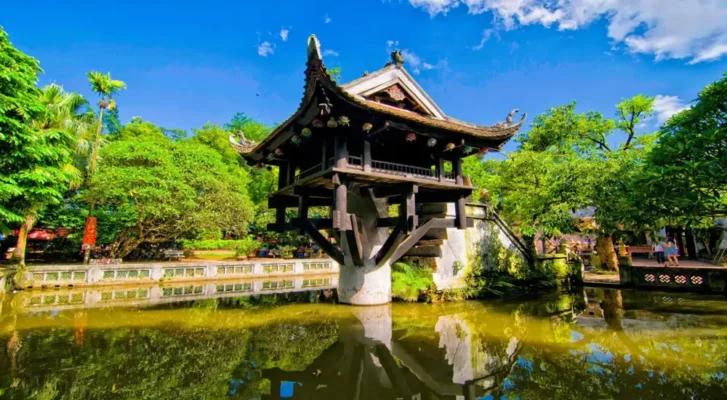
Hanoi, the capital of Vietnam, is well known for its centuries-old architecture. And a rich culture with Southeast Asian, Chinese and French influences. At its heart is the chaotic Old Quarter, where the narrow streets are roughly arranged by trade.
Located in the Hoàng Liên Son Mountains of northwestern Vietnam, and is home of Hill Tribes, such as the Hmong, Tay and Dao. This is a popular trekking base, it overlooks the terraced rice fields of the Muong Hoa Valley. And is near the 3,143m-tall Phang Xi Pang peak, which is climbable via a steep, multiday guided walk.
Ha Giang lies in the remote far northern region of the country city is best experienced as a road trip on two wheels soaking up the majesty of the landscape and the atmosphere of the remote towns and minority villages.
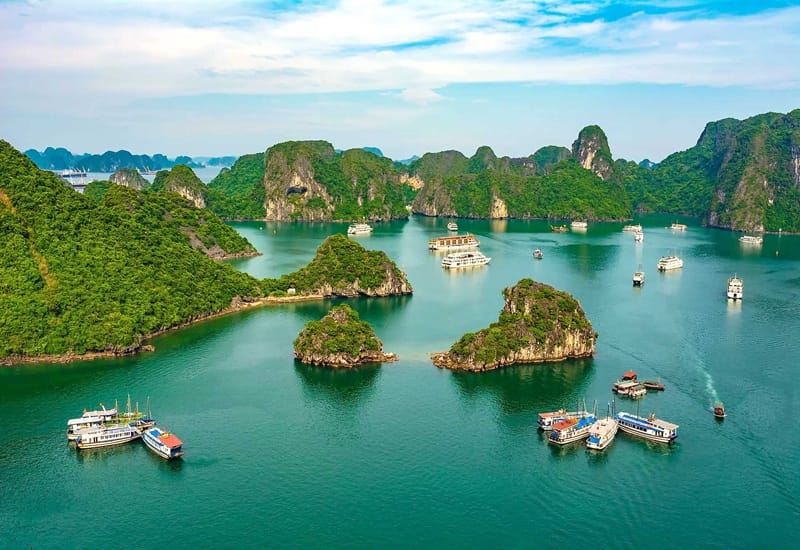
Hạ Long Bay, located in northeast of Vietnam, is known for its emerald waters. And thousands of towering limestone islands topped by rainforests. Junk boat cruises and sea kayak expeditions take visitors past islands named for their shapes. Including Stone Dog and Teapot islets
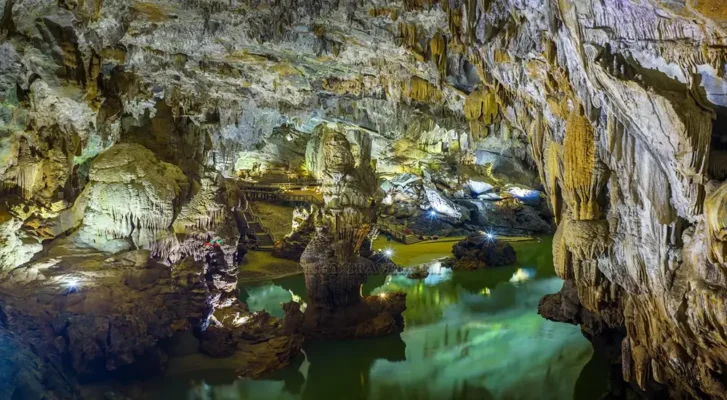
Phong Nha-Kẻ Bàng National Park is a protected area, located in north-central Vietnam bordering the Hin Namno Reserve in Laos. Characterized by mountains, tropical forests and underground streams, it’s known for its ancient limestone karsts and vast network of caves. These include the huge Sơn Đoòng cave and Phong Nha cave, which is big enough for boats. The area’s rich wildlife includes tigers, black bears and elephants.
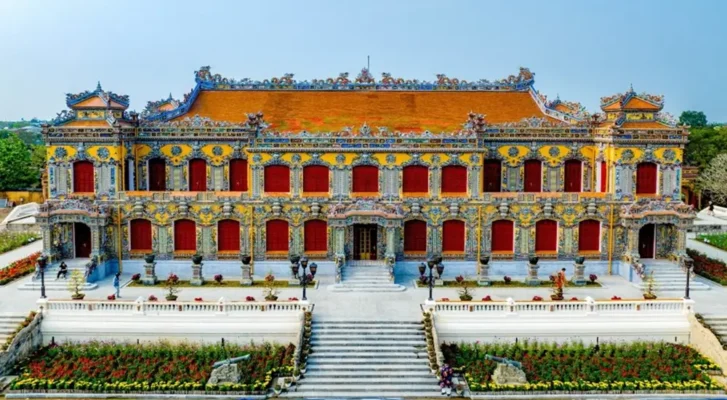
Hue City was the former imperial capital of Vietnam. City boasts a long-lasting treasure trove of world-renowned ancient wonders, distinctive cultural traits, and delightful traditional cuisine. Where visitors can immerse themselves in Vietnam’s illustrious history as if they are traveling back in time.
Da Nang, located in central region, is one of the biggest cities in Vietnam. You can feel it smaller and tamer than Ho Chi Minh City and Hanoi. While it is a big city with everything big cities have to offer. It comes with a friendly and laid-back beach town vibe that keeps the pace slow.
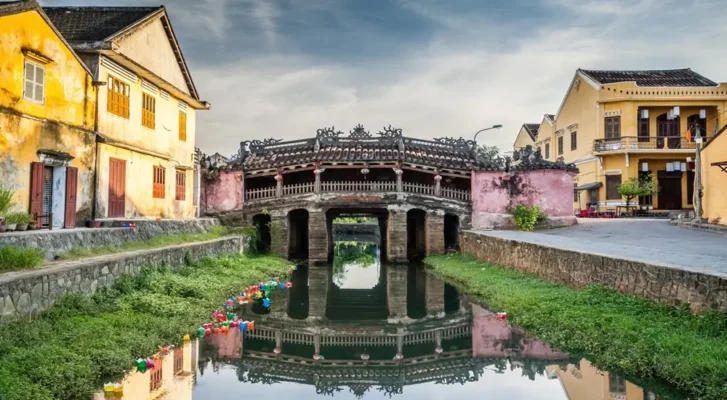
Hội An is located in central coast of Vietnam, known for its well-preserved Ancient Town, cut through with canals. The former port city’s melting-pot history is reflected in its architecture. A mix of styles and eras from wooden Chinese shophouses. And temples to colorful French colonial buildings, ornate Vietnamese tube houses and the iconic Japanese Covered Bridge with its pagoda.
Ho Chi Minh city, known as Saigon, is the economic heart of Vietnam. And the main hub of the southern region. A freewheeling, cosmopolitan metropolis, HCMC’s dynamic cityscape draws together old and new Vietnam in the most compact of spaces, representing the city’s past as well as its future. This city has many well-known attractions, including the War Museum, Notre Dame Cathedral Basilica, Ben Thanh Market, and Cu Chi Tunnels.
Mekong Delta, located in southern Vietnam, is a vast maze of rivers, swamps and islands. It is home to floating markets, Khmer pagodas and villages surrounded by rice paddies. Boats are the main means of transportation. And tours to the region often start in nearby Ho Chi Minh City (formerly known as Saigon) or Can Tho, a bustling town in the heart of the delta.
Phu Quoc Island is famous for white-sand beaches and resorts. Most of which are along the palm-lined southwest coast. Phú Quốc National Park covers more than half of this island. Which features mountains, dense tropical jungle, hiking trails and wildlife. Duong Dong is the largest town, with day and night markets selling crafts, produce and fish.
Transportation in Vietnam:
Transportation in Vietnam includes a mix of road, rail, air, and water travel. With buses and minivans being the primary mode for long-distance travel. In big cities, common options are Grab (Car/Bike), Motorbike Taxis (Xe Ôm), Metered Taxis. You can book through apps like Grab or Apps. For longer distances, you can take flights, train, tourist buses, local buses, … The country’s road network has improved a lot. That helps the travel between major hubs easier. Though conditions can vary.
What to eat in Vietnam?
Foreign visitors usually know about Phở (Noodle Soup) and Bánh Mì (Vietnamese Sandwich) when talking about Vietnamese Food. But some of Vietnamese Dishes you can try when traveling in Vietnam including: Banh Mi (French Baguette – Throughout Country), Vietnamese Pho (Rice Noodle Soup – Northern & Southern Vietnam), Bún Chả (Grilled Pork with Rice Noodle – Hanoi), Banh Xeo (Crispy Pancake – Souhtern Vietnam), Gỏi Cuốn (Vietnamese Fresh Spring Rolls – Throughout Country), Mi Quang Noodle (Da Nang & Hoi An), Bun Thit Nuong (Grill Pork with Noodle – Throughout Country), Bún Bò Huế (Hue Noodle Soup with Beef – in Hue), Nem Lụi Huế (Hue Grilled Minced Pork on Lemongrass Skewers – in Hue), Cao Lầu (Hoi An Noodle with Pork – in Hoi An).