Introduction about Chiang Mai Thailand:
Chiang Mai Thailand, often called the “Rose of the North,” is the largest city in Northern Thailand and the former capital of the historic Lanna Kingdom. Located approximately 700 km north of Bangkok, it serves as the region’s cultural and spiritual heart, blending centuries-old traditions with a modern, relaxed lifestyle.
Area and population: As of 2026, Chiang Mai is defined by several distinct administrative and geographic zones, each with its own area and population metrics. It is notably the largest province in Thailand by land area. The geographic & administrative Summary (2026) as below:
Chiang Mai Province:
– Area: Approximately 22,311 km² (8,614 sq mi).
– Population: Approximately 1.8 million people.
– Geography: Predominantly mountainous (80% of total land), featuring Thailand’s highest peak, Doi Inthanon.
Chiang Mai Urban/Metropolitan Area:
– Area: Approximately 405 km² (156 sq mi).
– Population: Estimated at 1,260,000 for 2026. This urban sprawl extends beyond the city center into neighboring districts like Mae Rim, San Kamphaeng, and Hang Dong.
– Note: The “real” population is often considered higher (up to 1.5 million) when accounting for unregistered residents, students, and expats not captured in official census data.
City Municipality (Thesaban Nakhon):
– Area: A small core of 40.2 km² (15.5 sq mi) centered on the historic “Old City”.
– Population: Approximately 127,000 to 141,000 registered residents.
– Density: Highly concentrated at over 3,100 people per km².
Regional Ranking:
Chiang Mai is the second-largest city in Thailand by urban population after Bangkok. Because of its unique sprawl, it is the only city in Thailand besides Bangkok whose urban area spans multiple districts.
Brief History of Chiang Mai Thailand:
Chiang Mai ‘s history spans over 700 years, beginning as the center of the independent Lanna Kingdom before eventually being integrated into modern Thailand.
The Founding and Golden Age (1296–1558):
Foundation: King Mangrai founded Chiang Mai in 1296 as the “New City” (Chiang Mai) to serve as the capital of the Lanna Kingdom (“Kingdom of a Million Rice Fields”).
Strategic Design: The city was built with a distinctive square moat and brick walls to protect against potential invaders.
Cultural Hub: During this “Golden Age,” Chiang Mai became a major center for Theravada Buddhism, leading to the construction of famous temples like Wat Phra Singh and Wat Phra That Doi Suthep.
Burmese Rule and Abandonment (1558–1774):
Invasion: In 1558, the powerful Toungoo Dynasty of Burma conquered Chiang Mai, ending the Mangrai dynasty’s direct rule.
Stagnation: The city remained a Burmese vassal for over 200 years. Frequent warfare between Burma and the Siamese kingdom of Ayutthaya left the region devastated.
Desertion: By 1776, after the Burmese were driven out by Siamese King Taksin and local leader Chao Kawila, the city was so ruined and depopulated that it was largely abandoned for 15 years (until 1791).
Revival and Integration (1796–Early 20th Century):
Repopulation: Prince Kawila re-established the city in 1796, bringing in diverse ethnic groups from neighboring regions to rebuild and resettle the capital.
Siamese Dependency: Chiang Mai functioned as a semi-autonomous vassal of Siam (modern Thailand) throughout the 19th century.
Formal Annexation: In 1892, under King Chulalongkorn (Rama V), the Lanna region was formally integrated into the Siamese administrative system as “Monthon Payap”.
Modern Era (1922–Present):
Infrastructure: The arrival of the railway in 1922 ended the city’s relative isolation and transformed it into a major trading and transportation hub.
Official Status: Chiang Mai officially became a province of Thailand in 1932 following the end of the absolute monarchy.
Contemporary Identity: Since the 1980s, the city has evolved into a global tourism destination and the cultural capital of Northern Thailand, known for its unique Lanna heritage and modern role as a “digital nomad” hub.
What to See, Places to Visit and Best Things to Do in Chiang Mai:
Chiang Mai offers a rich blend of cultural heritage, natural beauty, and vibrant modern life. Key attractions include ancient temples, ethical elephant sanctuaries, bustling markets, and stunning natural parks like
Iconic Temples & Cultural Sites:
– Wat Phra That Doi Suthep: Perched high on Mount Doi Suthep, this magnificent golden temple is one of Northern Thailand’s most sacred sites, offering breathtaking panoramic views of the city. Visitors can climb the 309 steps of the Naga (serpent) staircase or take a cable car.

Wat Phra That Doi Suthep (Photo Credit: zoomtravel)
– Wat Chedi Luang: Located in the heart of the Old City, these impressive ancient ruins once housed the Emerald Buddha. It’s a great spot to see Lanna-style architecture and participate in daily monk chats to learn about Buddhism.

Wat Chedi Luang (Photo Credit: mythailandtours)
– The Wat Phra Singh Woramahawihan: Known for its highly revered Lion Buddha image and ornate golden chedis, this temple is one of the most popular and historically significant in the Old City.

Wat Phra Singh Woramahawihan (Photo Credit: renown-travel)
– The Wat Pha Lat: A serene and picturesque “hidden” forest temple along the Monk’s Trail on the way up to Doi Suthep, offering a tranquil escape and beautiful natural surroundings.

Wat Pha Lat (Photo Credit: olsentours)
Nature & Outdoor Adventures:
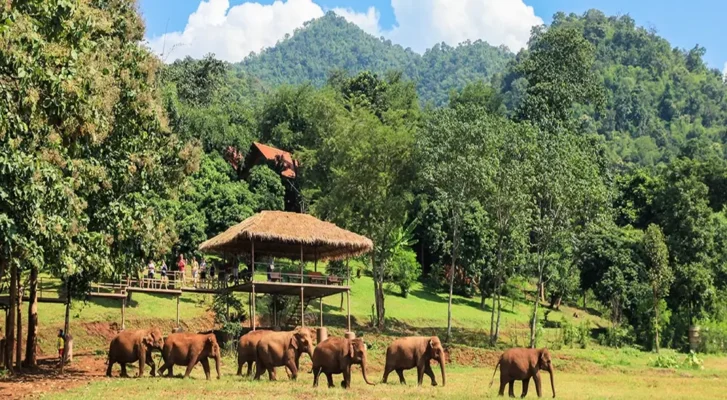
– Ethical Elephant Sanctuaries: Interact with rescued elephants in a responsible environment that prohibits riding. The Elephant Nature Park and Kanta Elephant Sanctuary offer half-day, full-day, and overnight programs where you can feed, bathe, and observe these gentle giants in their natural habitat.

Ethical Elephant Sanctuaries (Photo Credit: pm-tours)
– Doi Inthanon National Park: Visit Thailand’s highest peak (8,415 ft or 2,565m) for cooler temperatures, scenic hiking trails, impressive waterfalls (like the Sticky Waterfalls), and the twin Royal pagodas.

Doi Inthanon National Park (Photo Credit: bestpricetravel)
– Bua Thong Sticky Waterfalls: A unique natural attraction where mineral-rich rocks allow you to climb up the waterfall without slipping, a fun and refreshing experience.

Bua Thong Sticky Waterfalls (Photo Credit: takemetour)
– Chiang Mai Grand Canyon: A former limestone quarry turned water park, offering swimming, cliff jumping, inflatable obstacles, and ziplining.

Chiang Mai Grand Canyon (Photo Credit: mythailandtours)
Markets & Local Experiences:
– Sunday Walking Street Market: A haven for shopping and street food, this bustling market runs from Tha Phae Gate through the Old City every Sunday evening, offering local handicrafts, art, and delicious Northern Thai cuisine.
– Chiang Mai Night Bazaar: Open nightly on Changklan Road, this is a bustling spot for souvenirs, clothing, food, and live music, and even features a nearby Muay Thai boxing stadium.
– Authentic Thai Cooking Class: Learn to cook traditional Thai dishes like Khao Soi or Pad Thai by taking a class, often including a visit to a local market and organic farm.
– Monk Chats: Engage in insightful conversations about Buddhism and Thai culture with local monks at temples such as Wat Chedi Luang or Wat Suan Dok.
Chiang Mai Thailand Weather/Climate and Best Time to Visit:
Chiang Mai has a tropical savanna climate with three distinct seasons: a cool/dry season, a hot season, and a rainy (monsoon) season. The best time to visit is during the cool and dry season, from November to February, for the most comfortable weather and outdoor activities.
Chiang Mai’s Three Seasons:
| Season | Months | Temperature Range (Avg. High/Low) | Characteristics |
| Cool & Dry | November – February | 28°C/15°C (82°F/59°F) | Pleasant days, chilly nights, clear skies, and minimal rain. This is peak tourist season. |
| Hot | March – May | 36°C/24°C (97°F/75°F) | Intense heat, high humidity, and the “burning season” haze (especially in March/April). |
| Rainy | June – October | 33°C/24°C (91°F/75°F) | Lush green landscapes, frequent short rain showers (usually in the afternoon), fewer tourists, and lower prices. |
Best Time to Visit Chiang Mai:
The ideal time to visit Chiang Mai in Thailand depends on your preferences. Please take a look at our recommendations below to choose your best time to travel to Chiang Mai:
- For the Best Weather & Festivals: Visit from November to February. The weather is perfect for exploring temples, hiking in national parks, and attending major cultural events like the Loy Krathong and Yi Peng Lantern Festivals in November. Be prepared for larger crowds and higher accommodation prices during this peak season.
- For Budget Travel & Green Landscapes: The rainy season (June to October) offers the lowest prices and the most vibrant, lush green scenery, especially around waterfalls and rice fields. Rain typically comes in short, heavy bursts, leaving plenty of time for activities.
- Time to Avoid (for most travelers): The hot season, particularly March and April, is generally considered the worst time to visit due to extreme heat (often reaching 40°C or 104°F) and the “burning season,” which causes severe air pollution and haze that obscures mountain views.
Accommodation and Best Places to Stay in Chiang Mai Thailand:
Chiang Mai provides a diverse range of accommodation options, from budget-friendly hostels to luxury riverside resorts. The best place to stay depends on your travel style and preferences. Whether you want to be close to historic temples, trendy cafes, or peaceful nature.
The Old City: Best for First-Timers & Culture Seekers:
The historic heart of Chiang Mai, enclosed by a moat and ancient walls, is ideal for those who want to explore temples, markets, and cultural sites on foot. It features charming boutique hotels and guesthouses, but no large chain hotels due to height restrictions.
Nimmanhaemin (Nimman): Best for Nightlife & Digital Nomads:
This modern, upscale neighborhood is popular with young Thais, expats, and digital nomads. It is known for its trendy cafes, stylish restaurants, bars, art galleries, and shopping malls like Maya Mall and One Nimman.
Riverside: Best for Luxury & Tranquility:
For a more relaxed and romantic experience, the area along the Mae Ping River offers serene views and high-end resorts, while still being close to the Night Bazaar and Old City.
Night Bazaar Area: Best for Shopping & Entertainment:
Located between the Old City and the river, this bustling area is home to the famous nightly market. That offers ample shopping and dining options, with a mix of budget and luxury accommodation.
Transportation and Getting Around in Chiang Mai Thailand:
Getting to and around Chiang Mai is straightforward with various options to suit different budgets and travel styles. The city relies heavily on local road transport, lacking a major urban rail system.
Getting To Chiang Mai (From Bangkok):
– By Plane: This is the fastest option, with flights taking just over an hour. Numerous budget and full-service airlines operate daily from both Suvarnabhumi (BKK) and Don Mueang (DMK) airports to Chiang Mai International Airport (CNX).
– By Train: An overnight sleeper train is a popular, scenic, and comfortable option, saving on a night’s accommodation. The journey takes around 10 to 14 hours and departs from Krung Thep Aphiwat Central Terminal in Bangkok.
– By Bus: The most budget-friendly option. Buses run frequently from Bangkok’s Mochit Bus Terminal to Chiang Mai’s Arcade Bus Terminal (Terminal 3). The trip typically takes 9 to 12 hours.
Getting Around Within Chiang Mai:
The Old City of Chiang Mai is compact and easily explored on foot. But there are also some other means of transport you need to venture further.
– Songthaews (Red Trucks): These shared, red pickup trucks are the backbone of local transport. Flag one down, tell the driver your destination, and hop in if they are going your way. Fares within the city are generally at a flat rate of around 30 THB per person.
– Ride-Hailing Apps (Grab, Bolt, InDriver): These apps are widely used and offer fixed prices and easy pickups, eliminating the need to negotiate fares. They are often the most convenient and cost-effective method for private travel.
– Tuk-Tuks: The iconic three-wheelers are fun for short trips. But fares should always be negotiated before the journey begins. As they can be more expensive than songthaews or Grab cars.
– Rental (Motorbike/Car):
+ Motorbikes are popular for exploring the city and surrounding mountains (e.g., the Mae Sa Valley loop). Rentals start from 200-300 THB/day, but ensure you have an international driving permit and insurance.
+ Cars are a good choice if you plan extensive day trips out of the city to national parks or neighboring provinces.
– RTC City Bus: Air-conditioned blue buses run on specific routes. That offers a cheap (around 30-50 THB flat fare) and comfortable way to reach major hubs like the airport or bus stations.