Introduction about Vientiane in Laos:
Vientiane Laos Travel Guide: Vientiane is the capital and largest city of Laos, famously known as the most laid-back and quiet capital in Southeast Asia. Located along a curve of the Mekong River directly across the border from Thailand, it houses around 840,000 residents. The city seamlessly blends ancient Theravada Buddhist traditions with tree-lined boulevards and French colonial architecture.
Brief History of Vientiane in Laos:
Vientiane evolved from an ancient trading outpost into the capital of the historic Lan Xang Kingdom, experienced near-total destruction by Siamese forces, and was later resurrected by French colonizers to become the modern political heart of Laos. The timeline below breaks down the major eras that shaped the city into Southeast Asia’s most laid-back capital.
Early Beginnings (9th–14th Century):
- Khmer and Mon Origins: Vientiane started as a small Mon-Dvaravati and Khmer settlement and trading port along the Mekong River.
- Incorporation into Lan Xang: In 1354, King Fa Ngum unified the region to create the Lan Xang Kingdom (the “Kingdom of a Million Elephants”), transforming Vientiane into a prominent regional administrative center.
The Golden Age & Capital Status (1563–1707):
- Strategic Relocation: In 1563, King Setthathirath officially moved the capital from Luang Prabang to Vientiane to safeguard the government from Burmese invasions.
- Religious Boom: King Setthathirath spearheaded the construction of legendary monuments like the Pha That Luang golden stupa and Ho Phra Keo to house the revered Emerald Buddha.
- Kingdom Split: Following decades of regional prosperity, succession disputes caused the Lan Xang Kingdom to split in 1707, leaving Vientiane as the capital of an isolated, independent Lao kingdom.
Siamese Conquering & Complete Destruction (1779–1828):
- Vassal State: In 1779, Siamese (Thai) forces captured Vientiane, making it a vassal state of Siam and seizing the Emerald Buddha.
- The 1827 Rebellion: Lao King Anouvong launched an independence rebellion against Siam in 1827.
- Total Annihilation: The rebellion failed catastrophically. In 1828, Siamese armies retaliated by systematically looting, burning, and depopulating Vientiane. Only Wat Si Saket was left standing; the city was abandoned to the jungle for decades.
French Resurrect and Rebuild (1893–1953):
- Colonial Control: France assumed control of Lao territories in 1893 after the Franco-Siamese War.
- Administrative Capital: In 1899, the French designated Vientiane as the administrative capital of their protectorate.
- Urban Redesign: French engineers cleared the jungle, mapped out tree-lined boulevards, constructed colonial villa offices, and restored ruined monuments like Pha That Luang.
- WWII Interruption: Japanese forces briefly occupied Vientiane during World War II, which temporarily disrupted French authority.
Full Independence & Modern Era (1953–Present):
- Sovereignty: Laos achieved complete independence from France in 1953, solidifying Vientiane as the official capital of the new constitutional monarchy.
- The Secret War: During the Laotian Civil War (1960–1973), Vientiane served as a tense political battleground and a base for royalist forces.
- Communist Takeover: In December 1975, the communist Pathet Lao movement took control of the country, officially abolishing the monarchy and declaring Vientiane the capital of the Lao People’s Democratic Republic.
What to See, Places to Visit and Best Things to Do:
Vientiane is packed with historic temples, striking national monuments, and unique humanitarian centers. This guide covers the absolute best landmarks, hidden gems, and local experiences you should add to your travel list.
Most Famous Landmarks:
Pha That Luang (Buddhist temple):
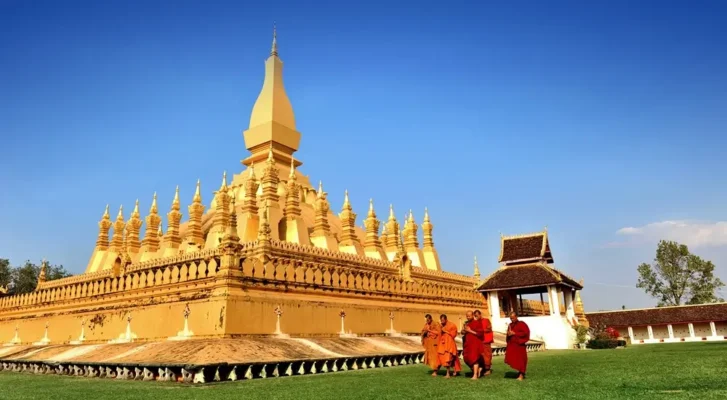
Laos’ most sacred monument is a striking, 44-meter-tall golden Buddhist stupa. It represents the ultimate symbol of Lao sovereignty and Buddhist faith.

Pha That Luang (Buddhist temple) – Photo Credit: visitsoutheastasia
Travel Tip: You should arrive in the early morning to watch the sunlight gleam off the gold plating, and remember to wear clothes that cover your shoulders and knees.
Patuxai Victory Monument:
Built between 1957 and 1968, this massive concrete triumphal arch pays tribute to those who fought for independence from France. While it resembles the Arc de Triomphe from afar, it is fully decorated with delicate traditional Lao motifs and Buddhist carvings.
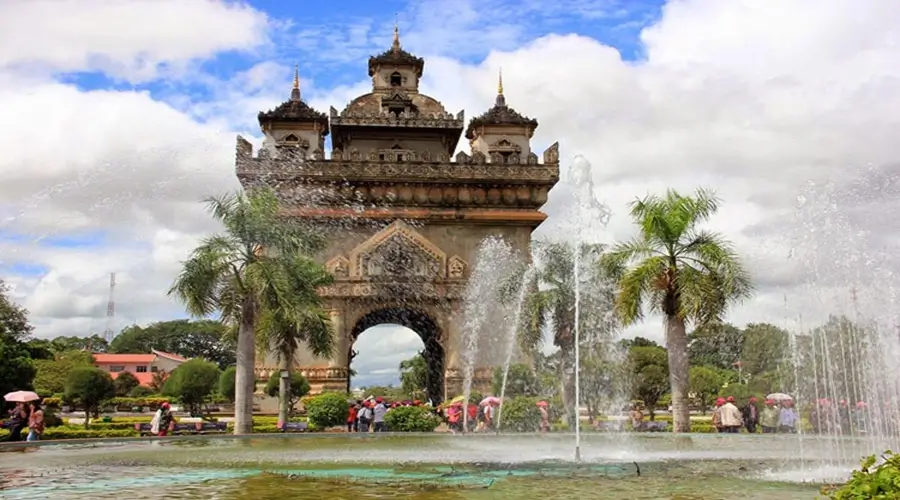
Patuxai Victory Monument – Photo Credit: asiakingtravel
Travel Tip: For roughly 30,000 Lao Kip, you can climb the stairs to the upper observation deck to enjoy a panoramic view of downtown.
Wat Si Saket:
Known as the oldest temple in Vientiane to survive in its original form, it features beautiful Siamese-style architecture and a cloister wall packed with over 6,800 small Buddha statues tucked into individual niches.
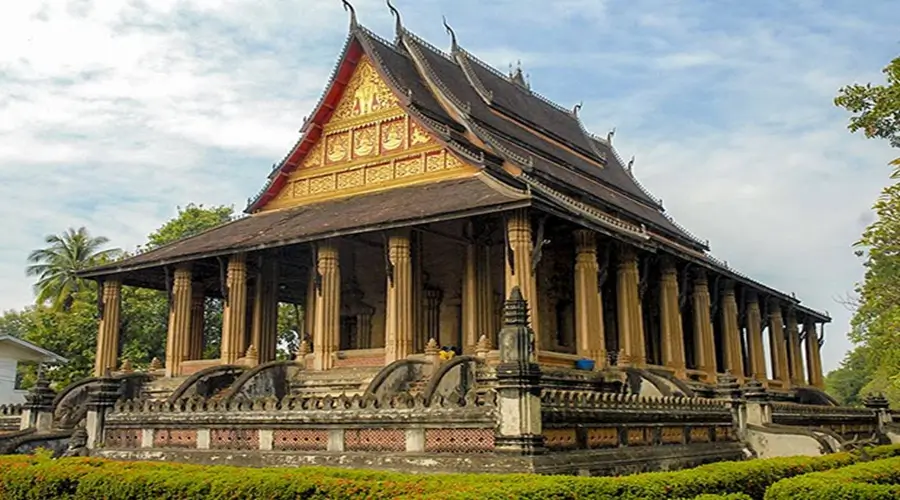
Wat Si Saket – Photo Credit: golaostours
Unique Sightseeing & Day Trips:
Buddha Park (Wat Xieng Khouane Luang):
Located along the Mekong River, this open-air sculpture park contains more than 200 massive concrete statues depicting dramatic figures from Buddhist and Hindu mythology.
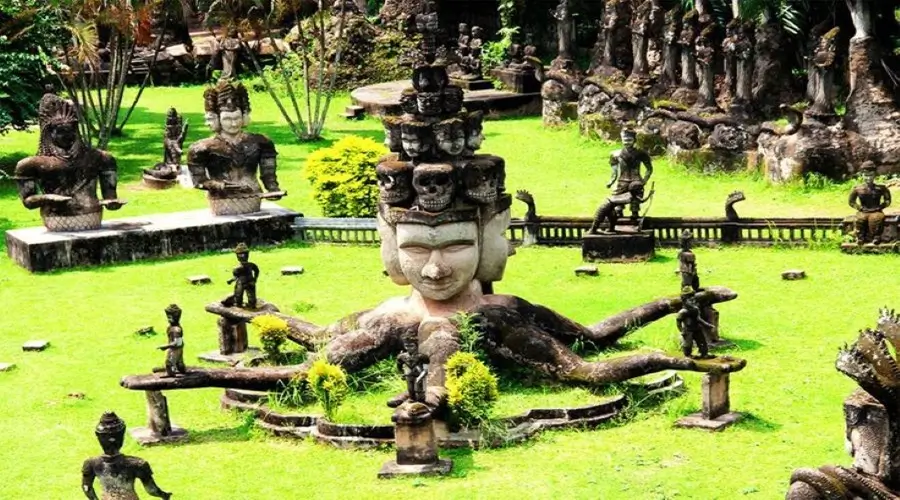
Buddha Park – Photo Credit: vietnamparadisetravel
Highlights: You can walk right inside a giant, pumpkin-shaped sculpture and climb to the top for a view of the entire park, or marvel at the massive 40-meter-long reclining Buddha.
COPE Visitor Centre:
A deeply moving and educational museum that sheds light on Laos’ modern history. COPE provides prosthetic limbs and rehabilitation services to victims of Unexploded Ordnance (UXO) left over from the Secret War.
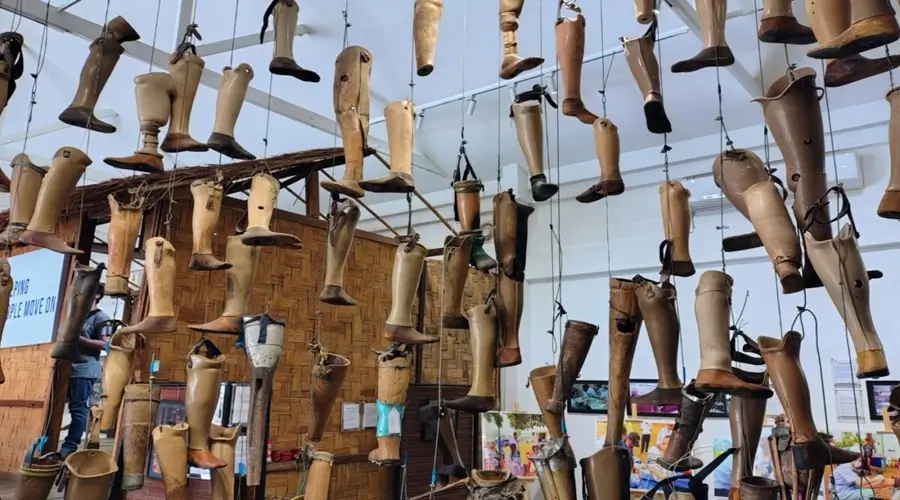
COPE Visitor Centre – Photo Credit: worldtravelfamily
Why Should You Visit: Admission is free (donations are highly encouraged), and watching their 40-minute documentary films provides critical context on the resilience of the Laotian people.
Best Evening or Nightlife Activities:
Sunset at Mekong Riverside Park:
Join hundreds of locals who gather on the banks of the Mekong River every evening to jog, do group aerobics, or sit back and watch the sunset face directly toward Thailand.
Shopping at the Vientiane Night Market:
Instantly recognizable by its long rows of iconic red-roofed tents, this bustling open-air market stretches right along the riverbank. It is the ultimate spot to pick up budget-friendly souvenirs, local handicrafts, art, and linen clothing.
Eating at the Vientiane Night Food Market on Rue Hengboun:
While the riverside market is great for shopping, head inland to Rue Hengboun for the absolute best street food You can graze on Ping Gai (grilled chicken skewers), fresh papaya salad, coconut pancakes, and cold Beerlao.
Weather/Climate and Best Time to Visit Vientiane in Laos:
The absolute best time to visit Vientiane is during the cool-dry season from November to February. During these months, the weather is pleasantly warm, sunny, and perfect for walking around the city’s outdoor monuments without enduring extreme heat or rain. Vientiane has a tropical savanna climate, which splits the year into two highly distinct seasons: a hot, rainy summer and a dry, sunny winter.
Vientiane’s Seasons At A Glance:
Cool-Dry Season (November to February):
- The Vibe: This is peak tourist season. Skies are clear blue, and the humidity drops drastically.
- Temperature: Daily highs average 28°C to 30°C (82°F to 86°F), while evenings cool down to a refreshing 17°C to 20°C (63°F to 68°F).
Hot-Dry Season (March to April):
- The Vibe: Temperatures skyrocket right before the monsoon arrives. It can get incredibly dusty and sticky.
- Temperature: Daytime temperatures regularly climb to 35°C to 38°C (95°F to 100°F).
- Highlights: If you visit in mid-April, you will experience Lao New Year (Pi Mai Lao), where the entire city celebrates with massive, refreshing water fights in the streets.
- Wet/Monsoon
Season (May to October):
- The Vibe: The southwest monsoon brings frequent, heavy downpours, typically lasting a few hours in the afternoon or evening.
- Temperature: Highs average 31°C to 33°C (88°F to 91°F) with exceptionally high humidity.
- Perks: The countryside turns lush, green, and beautiful, hotel rates drop significantly, and the iconic Buddha Park is much quieter.
Monthly Climate Guide:
Because the weather changes dramatically throughout the year, use this quick-reference table to plan what to pack:
| Month | Average High | Average Low | Rain Days | Travel Verdict |
| January | 29°C (84°F) | 17°C (63°F) | 1 day | Excellent – Bright skies, very comfortable |
| February | 31°C (88°F) | 19°C (66°F) | 2 days | Excellent – Great for outdoor exploration |
| March | 34°C (93°F) | 22°C (72°F) | 4 days | Hot – Midday heat gets quite intense |
| April | 35°C (95°F) | 24°C (75°F) | 8 days | Very Hot – Saved by Lao New Year water festivals |
| May | 33°C (91°F) | 25°C (77°F) | 15 days | Rainy – Monsoon begins with heavy afternoon downpours |
| June | 32°C (90°F) | 25°C (77°F) | 16 days | Rainy – High humidity and frequent rain |
| July | 31°C (88°F) | 25°C (77°F) | 18 days | Wettest – Lush green landscapes but wet streets |
| August | 31°C (88°F) | 25°C (77°F) | 19 days | Wettest – Peak monsoon rain; Mekong River runs high |
| September | 31°C (88°F) | 24°C (75°F) | 16 days | Rainy – Showers start tapering off late in the month |
| October | 31°C (88°F) | 22°C (72°F) | 7 days | Good – Transition month; rain stops, nature is green |
| November | 30°C (86°F) | 20°C (68°F) | 2 days | Excellent – Cool breezes return; highly recommended |
| December | 28°C (82°F) | 17°C (63°F) | 1 day | Perfect – Best overall weather of the year |
Accommodation and Best Places to Stay in Vientiane in Laos:
The best neighborhoods to stay in Vientiane are Ban Haysoke and Ban Mixai, which together form the vibrant downtown riverfront district. Staying here places you within easy walking distance of top cafes, the Vientiane Night Market, and beautiful riverside sunset viewpoints. Depending on your travel style and budget, you can find excellent places to stay categorized across three main price tiers:
Luxury & Historic Splurges:
- Settha Palace Hotel: A stunning 5-star French colonial estate dating back to 1932. It offers a secluded, old-world oasis right in the city center, complete with period furniture, lush landscaped gardens, and a crystal-clear pool.
- Souphattra Heritage Vientiane: A highly rated boutique luxury hotel ideal for travelers seeking a premium, peaceful atmosphere. Known for its exceptional on-site dining, spacious balcony suites, and immaculate guest hospitality.
- Crowne Plaza Vientiane: Located just northwest of the main core, this modern high-rise offers premium, business-class comfort. It features massive rooms, an outdoor swimming pool, a full luxury spa, and a dependable gym.
Mid-Range & Unique Boutique Hotels:
- Lao Poet Hotel: Built on the historic former homesite of a famous local writer. It features gorgeous 1930s Indochine interior designs blended with modern creative details, topped off with a fantastic rooftop infinity pool looking out over the city.
- Eastin Hotel Vientiane: A modern 4-star option situated directly along the Mekong riverfront. This property is celebrated for offering great everyday value, pristine room layouts, and beautiful views across the river directly toward Thailand.
- Green Park Boutique Hotel: Located a short distance south near the COPE Visitor Centre. It is designed with classic Lao architecture, offering elegant private balconies that look down onto a peaceful, green water-lily pond and garden courtyard.
Budget-Friendly Hotels & Guesthouses:
- Lani’s House By The Ponds: A cozy, colonial-style 3-star hidden gem tucked away down a quiet alleyway. It provides a quiet, home-style bed and breakfast atmosphere while keeping you minutes from the central action.
- Riverside Hotel: A no-nonsense, casual 3-star hotel sitting just off the main waterfront walking tracks. It features air-conditioned private rooms, highly accessible city placement, and complimentary breakfast daily.
Transportation and Getting to and Around in Vientiane in Laos:
Getting to and around Vientiane has become remarkably efficient, thanks to recent major infrastructure projects like the Lao-China high-speed railway and local ride-hailing apps. Whether you are arriving internationally or navigating the downtown city streets, multiple transport choices are available.
Getting to Vientiane in Laos:
By Air:
- Wattay International Airport (VTE): Located right on the city’s edge. Because there are no direct flights from outside of Asia, travelers typically catch a connecting flight through major regional hubs like Bangkok, Hanoi, Kuala Lumpur, or Singapore.
- Transit to City: A dedicated airport shuttle bus runs every 1.5 to 2 hours straight to downtown. Alternatively, you can book a fixed-fare taxi at the airport arrivals desk.
By High-Speed Train (From Within Laos or China):
- Vientiane Railway Station: This massive, modern station connects Vientiane to northern hubs via the Lao-China Railway. It cuts down the grueling 8-hour mountain drive from Luang Prabang into a smooth 1 hour and 45 minute journey.
- Crucial Station Warning: Do not confuse this northern railway station with Khamsavath Station. Khamsavath sits to the east and handles cross-border trains arriving from Bangkok, Thailand. The two stations are not connected by rail. Both stations are located roughly 10–20 km outside downtown, so you will need a taxi or local bus to reach your hotel.
By Long-Distance Bus:
- Central Bus Station (Talat Sao): Handles short-distance routes and direct international buses coming across the border from Udon Thani, Thailand.
- Northern Bus Terminal: Serves long-distance routes coming from northern provinces and China.
- Southern Bus Terminal: Serves southern regions of Laos and cross-border sleeper buses from Vietnam.
- Getting Around Vientiane:
Ride-Hailing Apps (Highly Recommended):
The easiest way to move around without haggling over prices is by downloading local transport apps:
- LOCA: The top ride-hailing app in Laos (similar to Uber or Grab). It connects you with official taxis and premium private cars with transparent, metered pricing.
- Loca Minis & Kok Kok Move: Excellent smartphone-app options for booking compact, environmentally friendly electric mini-cars or vibrant orange electric tuk-tuks at fixed budget rates.
Traditional Tuk-Tuks
- Three-wheeled motorized tuk-tuks are parked on almost every street corner. They do not use meters, making firm price negotiation essential before you climb inside. Expect to pay more as a tourist than locals do.
Local Green City Buses:
- The Budget Pick: Vientiane runs a clean fleet of modern green transit buses (donated by Japan).
- Routes: All local routes originate and terminate at the central Talat Sao Bus Station. This includes the highly popular, cheap public bus route heading directly out to Buddha Park.
Bicycles and Motorbikes:
- Bicycles: Because downtown Vientiane follows a flat grid layout along the river, many guesthouses provide free or cheap daily bicycle rentals. It is a safe and incredibly peaceful way to visit central temples.
- Motorbikes: Available for rental at roughly $5 to $15 USD per day. Keep in mind that local road traffic can be unpredictable, and many side streets remain unpaved or narrow.