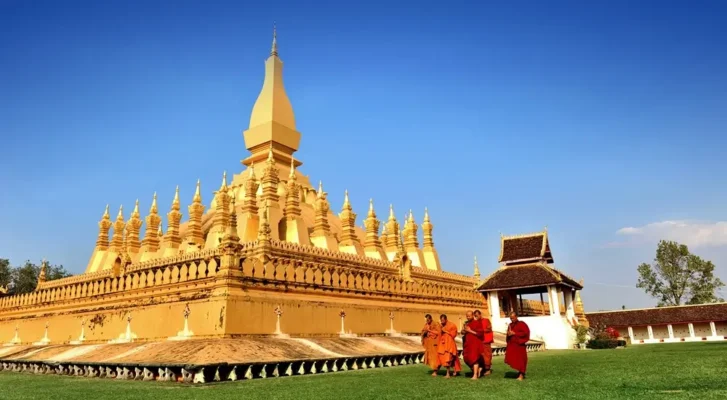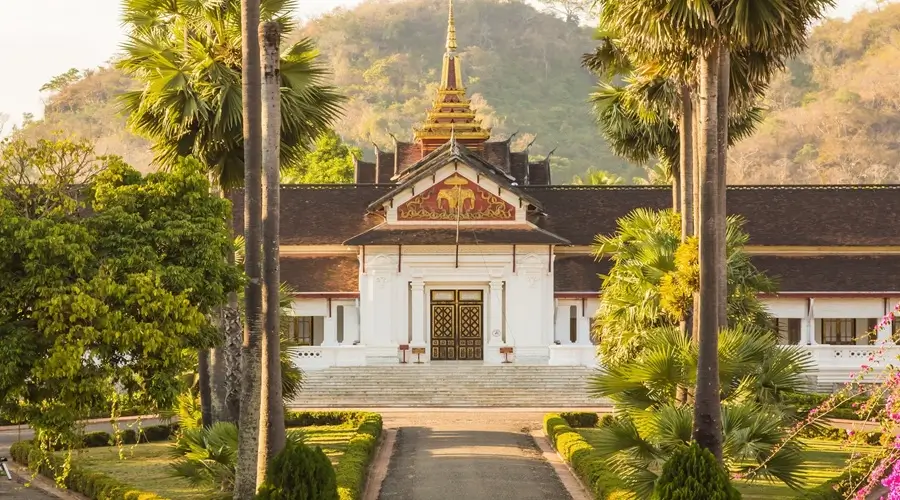
Introduction about Luang Prabang in Laos:
Luang Prabang Travel Guide: Luang Prabang is the historic former royal capital of Laos and a UNESCO World Heritage Site recognized for its remarkably well-preserved blend of traditional Lao architecture and European colonial influence. Often called the “Jewel of the Mekong,” this tranquil city is situated on a peninsula at the confluence of the Mekong and Nam Khan rivers in northern Laos.
Brief History of Luang Prabang in Laos:
The history of Luang Prabang spans over a millennium, evolving from a mythical settlement into the center of the powerful Kingdom of Lan Xang. Known as the “Royal Buddha Image,” its name reflects its enduring role as the spiritual and royal heart of Laos.
Early Origins and the Lan Xang Kingdom:
- Mythical Beginnings: Legends claim the first Lao leader was Khun Lo, who conquered the town in 698 AD. Early names for the city included Muang Sua and Xieng Dong Xieng Thong.
- Foundation of Lan Xang (1353): King Fa Ngum unified the region to establish the Kingdom of Lan Xang (“Million Elephants”), making Luang Prabang its first capital.
- Religious Significance: In the 14th century, Fa Ngum accepted the Phra Bang—a golden Buddha statue from the Khmer monarchy—giving the city its current name and cementing it as a Buddhist center.
- Shift of Power (1560): King Setthathirath moved the administrative capital to Vientiane to avoid invaders, but Luang Prabang remained the kingdom’s religious and royal seat.
Turmoil and Colonial Influence:
- Division and Sacking: In 1707, Lan Xang split into three independent kingdoms, including the Kingdom of Luang Prabang. In 1887, the city was devastated and looted by the Black Flag Army (Chinese bandits).
- French Protectorate (1893): Following the bandit attacks, King Sisavang Vong accepted French protection. The French colonial period introduced the European-style architecture and urban planning that defines the city’s unique townscape today.
- World War II: The city saw multiple occupiers, including Japanese troops in 1945, who briefly forced a declaration of independence before French rule was resumed.
Modern Era:
- End of the Monarchy (1975): Following the Lao Civil War, the Pathet Lao established a communist government, abolished the monarchy, and integrated the city into the Lao People’s Democratic Republic.
- UNESCO Recognition (1995): The historic center was inscribed as a UNESCO World Heritage Site for its remarkably preserved fusion of traditional Lao and French colonial architecture.
| Era | Key Event |
| 1353 | Founded as the capital of Lan Xang by King Fa Ngum. |
| 1560 | Administrative capital moved to Vientiane; Luang Prabang remains spiritual center. |
| 1893 | Becomes a French Protectorate. |
| 1975 | Monarchy abolished; city loses royal capital status. |
| 1995 | Designated a UNESCO World Heritage Site. |
What to See, Places to Visit and Best Things to Do:
Luang Prabang offers a serene blend of spiritual traditions, colonial architecture, and stunning natural landscapes. The town is best explored at a slow pace to appreciate its status as a UNESCO World Heritage Site.
Top Spiritual & Historic Sites:
Wat Xieng Thong (Buddhist Temple):
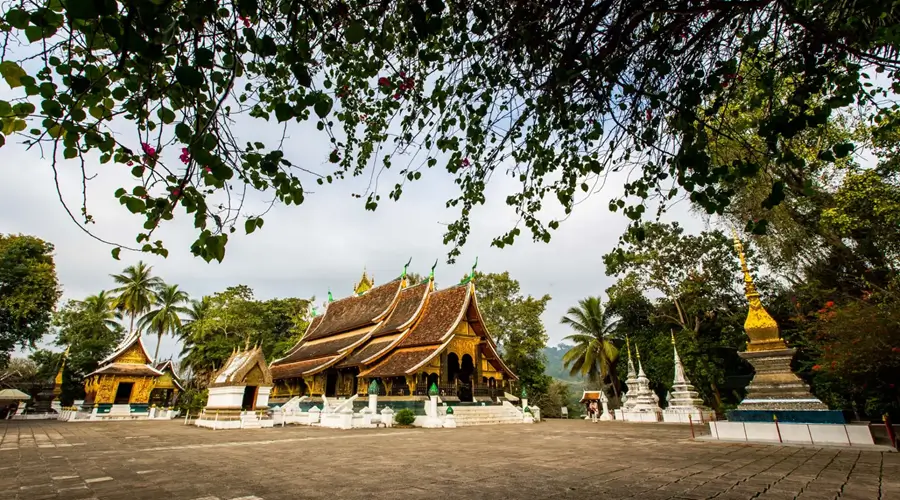
Wat Xieng Thong – Photo Credit: discoverlaos
Often cited as the most magnificent temple in Laos, this 16th-century complex features elaborate mosaics and sweeping roofs that touch the ground.
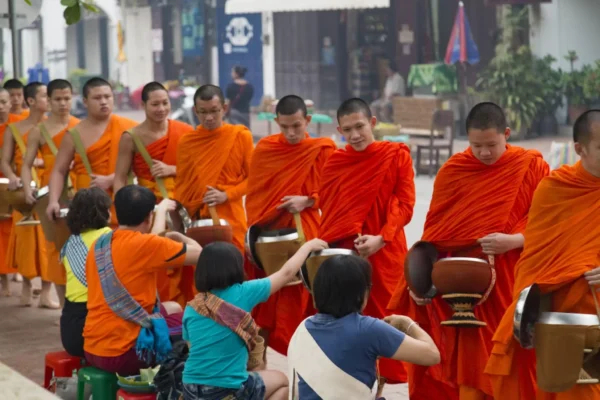
Alms Giving Ceremony (Tak Bat):
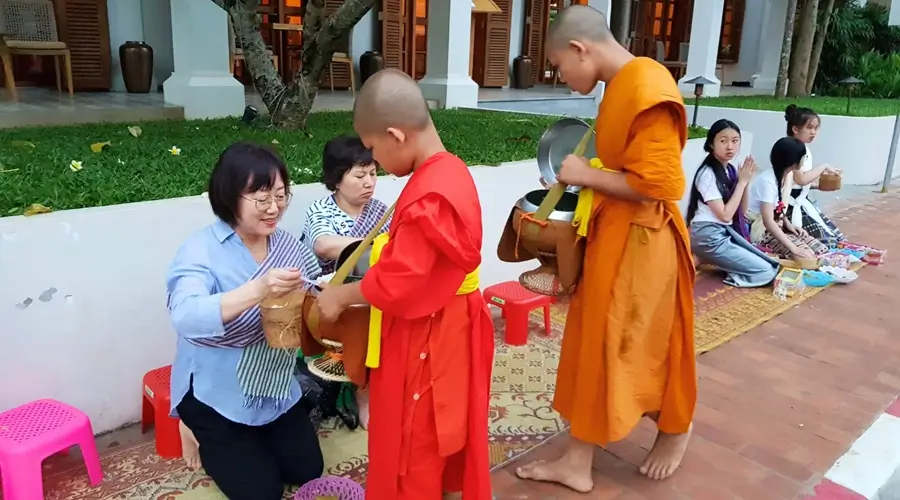
Alms Giving Ceremony – Photo Credit: indochinavoyages
A sacred sunrise ritual where hundreds of monks walk through the streets to collect offerings of sticky rice. Visitors are encouraged to observe silently and respectfully.
Royal Palace Museum:
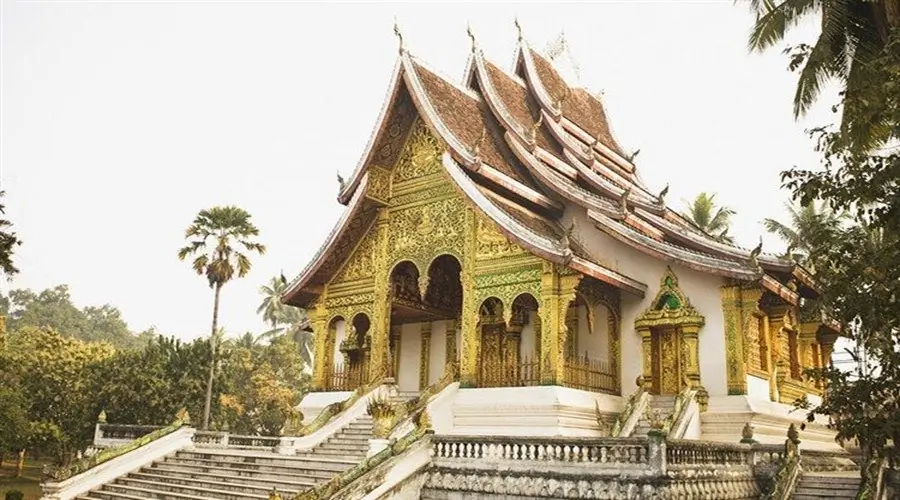
Royal Palace Museum – Photo Credit: vivutravel
The Royal Palace Museum (also known as the National Museum or Haw Kham) in Luang Prabang is the former residence of King Sisavang Vong, built in 1904. Located on the main Sisavangvong Road between Mount Phousi and the Mekong River, it offers a deep dive into Laotian history and royal lifestyle.
Mount Phousi (Buddhist temple):
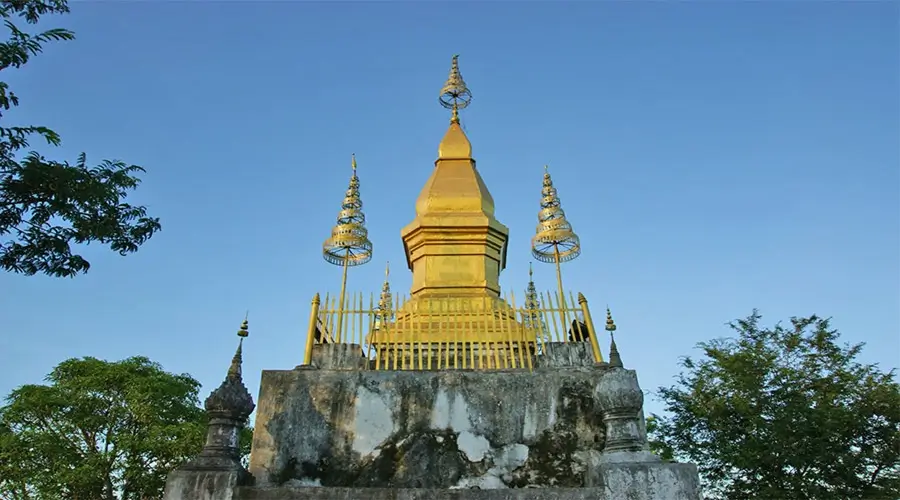
Mount Phousi Buddhist temple – Photo Credit: asiakingtravel
A hill in the center of town with 329 steps leading to a golden stupa. It is the premier spot for panoramic sunset views over the Mekong and Nam Khan rivers.
Natural Wonders & Wildlife:
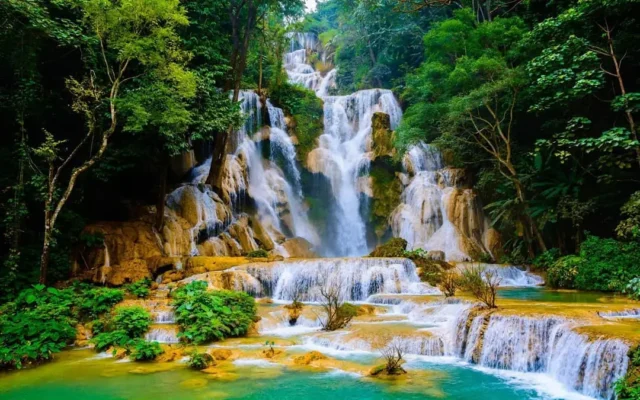
Kuang Si Waterfalls:
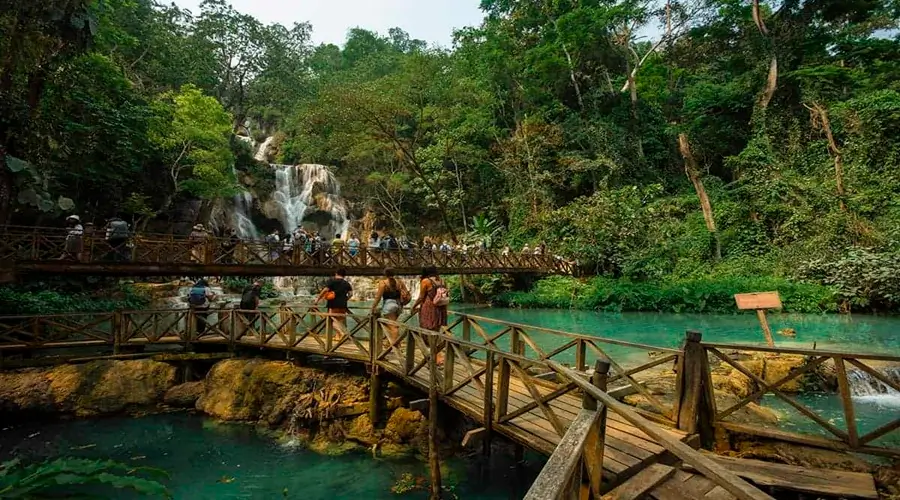
Kuang Si Waterfalls – Photo Credit: auasiatravel
A spectacular three-tiered waterfall with turquoise pools perfect for swimming. The site also hosts the Tat Kuang Si Bear Rescue Centre, which cares for rescued moon bears.
Pak Ou Caves (Buddhist temple):
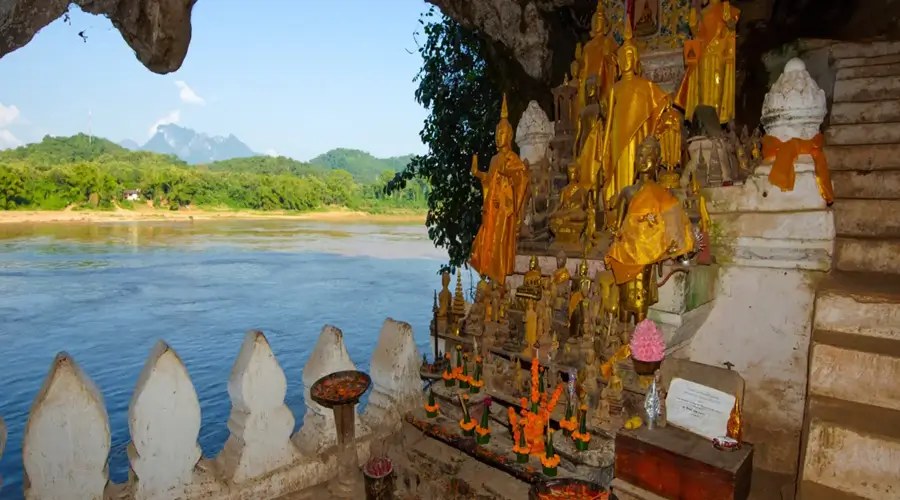
Pak Ou Caves – Photo Credit: discoverlaos
The Pak Ou Caves, located about 25 km north of Luang Prabang, are a sacred Buddhist site famous for housing over 4,000 Buddha statues. Carved into a limestone cliff at the confluence of the Mekong and Nam Ou Rivers, the site consists of two main grottoes: Tham Ting (lower cave) and Tham Theung (upper cave).
Elephant Conservation:
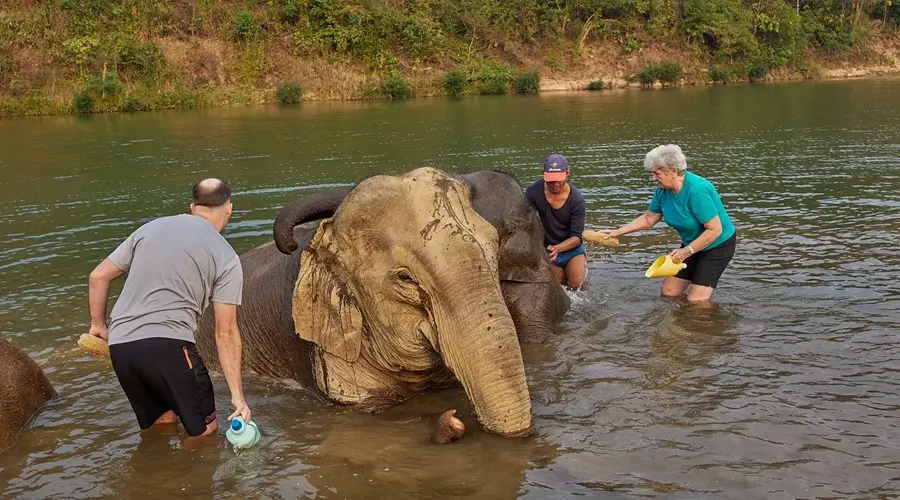
Elephant Conservation – Photo Credit: bestpricetravel
Elephant conservation in Luang Prabang focuses on shifting from traditional riding-based tourism to ethical, “no-ride” experiences that prioritize animal welfare and rewilding. The two most prominent and highly-rated ethical options are MandaLao Elephant Conservation, located just 15 km from town, and the Elephant Conservation Center (ECC) in nearby Sayaboury.
Cultural Activities & Markets:
- Luang Prabang Night Market: Held every evening on the main street, it is famous for handmade textiles, silver jewelry, and local street food.
- Living Craft Centre: Ock Pop Tok provides hands-on workshops in traditional silk weaving and natural dyeing.
- Traditional Arts and Ethnology Centre (TAEC): A small museum dedicated to the diverse ethnic groups of Laos and their cultural heritage.
| Activity | Best Time | Location |
| Alms Giving | Sunrise (approx. 5:30–6:30 AM) | Sakkaline Road |
| Mount Phousi | Late afternoon (for sunset) | Town Center |
| Night Market | 5:00 PM – 10:00 PM | Sisavangvong Road |
| Morning Market | 5:00 AM – 11:00 AM | Near the Royal Palace |
Weather/Climate and Best Time to Visit Luang Prabang in Laos:
The best time to visit Luang Prabang is during the cool and dry season from November to February, when temperatures are a comfortable 15°C to 27°C and skies are clear. This period is ideal for temple exploring, night market wandering, and visiting Kuang Si Falls.
Seasonal Climate Overview:
Luang Prabang Weather has a tropical monsoon climate with three distinct phases:
- Cool & Dry (November – February): This is the peak tourist season. Mornings and evenings can be surprisingly crisp (around 11°C), so packing layers is essential.
- Hot & Dry (March – April): Temperatures soar toward 35°C–40°C. This is also the “burning season,” where agricultural smoke can create significant haze and poor air quality, particularly in March. Despite the heat, April features the vibrant Lao New Year (Pi Mai) celebrations.
- Rainy Season (May – October): Characterized by high humidity and frequent, heavy downpours—often in short bursts during the afternoon or night. Landscapes become a lush, emerald green, and waterfalls are at their most powerful, though trekking can be difficult due to mud.
Monthly Weather Averages in Luang Prabang
| Month | Avg. Low (°C) | Avg. High (°C) | Rain (mm) | Travel Context |
| Jan | 11.0 | 23.1 | 3.1 | Best (Dry & Cool) |
| Feb | 12.4 | 24.5 | 2.9 | Best (Dry & Cool) |
| Mar | 16.0 | 24.5 | 5.4 | Hot / Hazy (Burning Season) |
| Apr | 17.7 | 27.5 | 7.3 | Hottest Month / Lao New Year |
| May | 19.4 | 28.4 | 7.8 | Start of Rainy Season |
| Jun | 18.2 | 28.4 | 8.2 | Rainy Season |
| Jul | 19.7 | 27.1 | 11.7 | Peak Rain |
| Aug | 19.2 | 27.7 | 10.5 | Peak Rain |
| Sep | 19.0 | 28.8 | 9.5 | Lush Greenery |
| Oct | 18.3 | 25.2 | 7.4 | Shoulder Season (Transitions) |
| Nov | 15.3 | 25.8 | 5.8 | Best (Dry & Cool) |
| Dec | 11.2 | 22.1 | 4.1 | Best (Dry & Cool) |
Data sourced from NOAA Global Historical Climatology Network.
Strategic Travel Tips:
- Best for Budget: Visit in the “Green Season” (May–September) for lower accommodation rates and fewer crowds.
- Avoid if Sensitive: If you have respiratory issues, avoid March when the smog from field burning is at its worst.
- Festivals: For a cultural experience, time your visit for the Boun That Luang (November) or the light festival Lai Heua Fai (October).
Accommodation and Best Places to Stay in Luang Prabang in Laos:
Luang Prabang offers a range of stays from heritage colonial mansions to riverside bungalows. The best area for most travelers is the Old Town (UNESCO Peninsula), which provides walking access to temples and the night market.
Best Areas to Stay:
- Old Town (UNESCO Peninsula): Best for first-timers and those wanting to be in the heart of the cultural action. This area is packed with restored French-colonial boutique hotels.
- Mekong Riverfront: Offers stunning sunset views and a more upscale, breezy feel with several high-end boutique options.
- Nam Khan Riverfront: Generally quieter and often slightly better value than the Mekong side. It features a mix of midrange boutique stays and upscale resorts.
- Outer Luang Prabang: Home to larger luxury resorts and eco-wellness sanctuaries that offer more space and tranquility away from the town center.
Transportation and Getting to and Around in Luang Prabang in Laos:
Getting to and around Luang Prabang has become significantly easier with the opening of the Laos-China Railway, which connects the city to Vientiane and Vang Vieng in just a few hours. Within the town, the historic center is highly walkable and bicycle-friendly.
Getting to Luang Prabang:
| Mode | Route/Origin | Details |
| Train | Vientiane, Vang Vieng, Boten | The high-speed train takes ~2 hours from Vientiane. Tickets can be booked 3 days in advance via the LCR Ticket App. |
| Plane | Regional Hubs | Luang Prabang International Airport (LPQ) receives daily flights from Bangkok, Hanoi, and Vientiane. |
| Slow Boat | Huay Xai (Thai Border) | A scenic 2-day journey down the Mekong with an overnight stay in Pakbeng. Costs range from ~$14 (public) to $140+ (luxury). |
| Bus/Minivan | Nearby Towns | Minivans are common for shorter regional trips (e.g., to Nong Khiaw), but longer routes can be bumpy and time-consuming. |
Getting Around the City:
- Walking: The best way to explore the UNESCO Peninsula.
- Bicycle: Widely available for rent (~20,000–50,000 kip/day). You can also use green shared bikes found around town via a QR-code app.
- Tuk-Tuk: The most common motorized transport. Short trips in town cost roughly $3 (approx. 65,000 kip). Always negotiate the price before starting the ride.
- Ride-Hailing: Apps like Loca and Maxim are available and provide fixed, transparent pricing.
Key Arrival Transfers:
- From the Airport: A taxi into town typically costs around 50,000–60,000 kip. Tuk-tuks outside the terminal may be slightly cheaper (~30,000 kip) if you are willing to negotiate.
- From the Train Station: The station is about 30 minutes from the town center. Shared minivans and tuk-tuks wait for arriving trains to transport passengers to their hotels.