
What Things to Do & Best Places to See in Hanoi Vietnam?
If you are looking for the Best Activities to Do and Must See Places in Hanoi, where ancient and proudly preserved Vietnamese culture is felt most keenly by foreign and domestic visitors, and progress wrestles with tradition in different districts of the city. Hanoi is actually over 1000 years old since 1010 so the wealth of history here is mind boggling: temples, ancient citadels, unique theatre and stunning wilderness just outside the city all offer fun-filled days in Vietnam’s capital. Make sure to visit as many of these attractions in Hanoi as possible because they all offer entertainment, beauty and education at different turns. Enjoy our list of Best Things to Do and Top Things to See, that not to be missed in Hanoi:
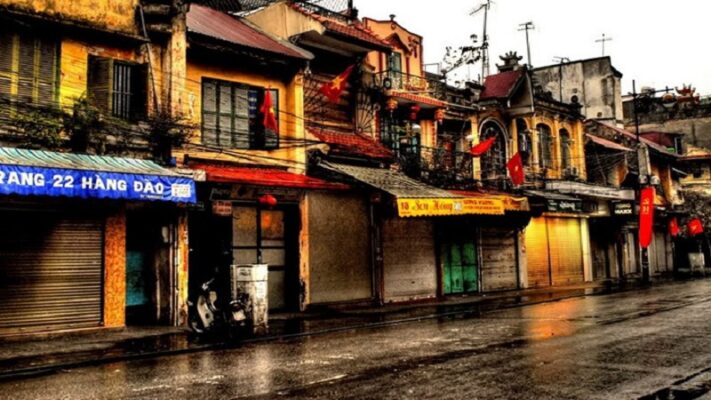
Also known as French Quarter. This area started from 1010 when King Ly Thai To chose this area to be the capital for the whole country. In the past Hanoi Old Quarter comprises of 36 streets packed with shops selling typical kinds of goods, each street named for its primary good or service.
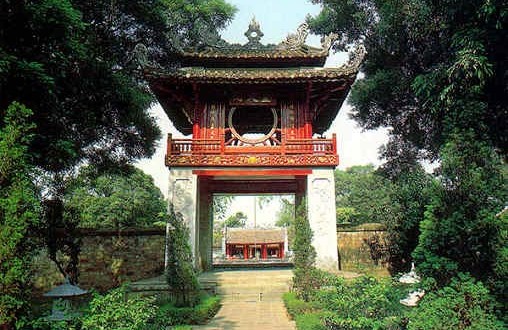
Started from 1070 as a temple for worshiping Confucius and extended in 1076 for the study of children on Royal Family. From 1253, It was open to be National College for talent student in the whole country to study.
Known as “Hilton Hanoi” to American Prisoner of War. It was first built by French in 1896 to detain Vietnamese Political Prisoners. During Vietnam War, it was used by the Communist Government to detain American Pilots, who were shot down when they bombed Hanoi.

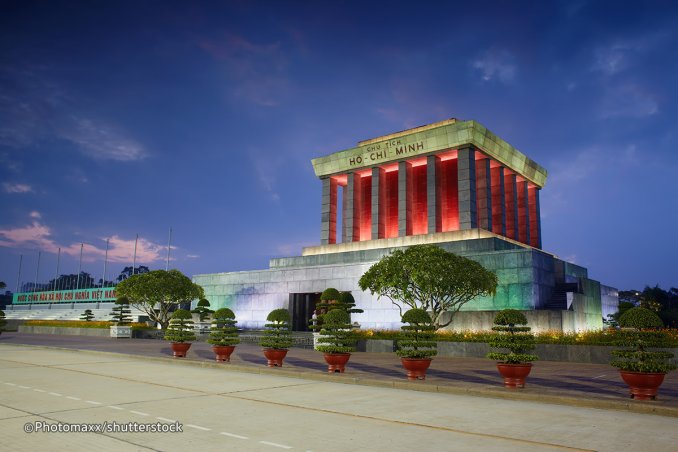
Including Presidential Palace (Built by French for French General Governor during French War), Ho Chi Minh Stilted House (where Ho Chi Minh lived and worked from 1957 to 1969) and Ho Chi Minh Mausoleun (built from 1973 – 1975) to preserve Ho Chi Minh’s Body. This also has a very typical pagoda in Vietnam named One Pillar Pagoda with its special architect. This is very popular place to visit in Hanoi for both Vietnamese and foriegn visitors.
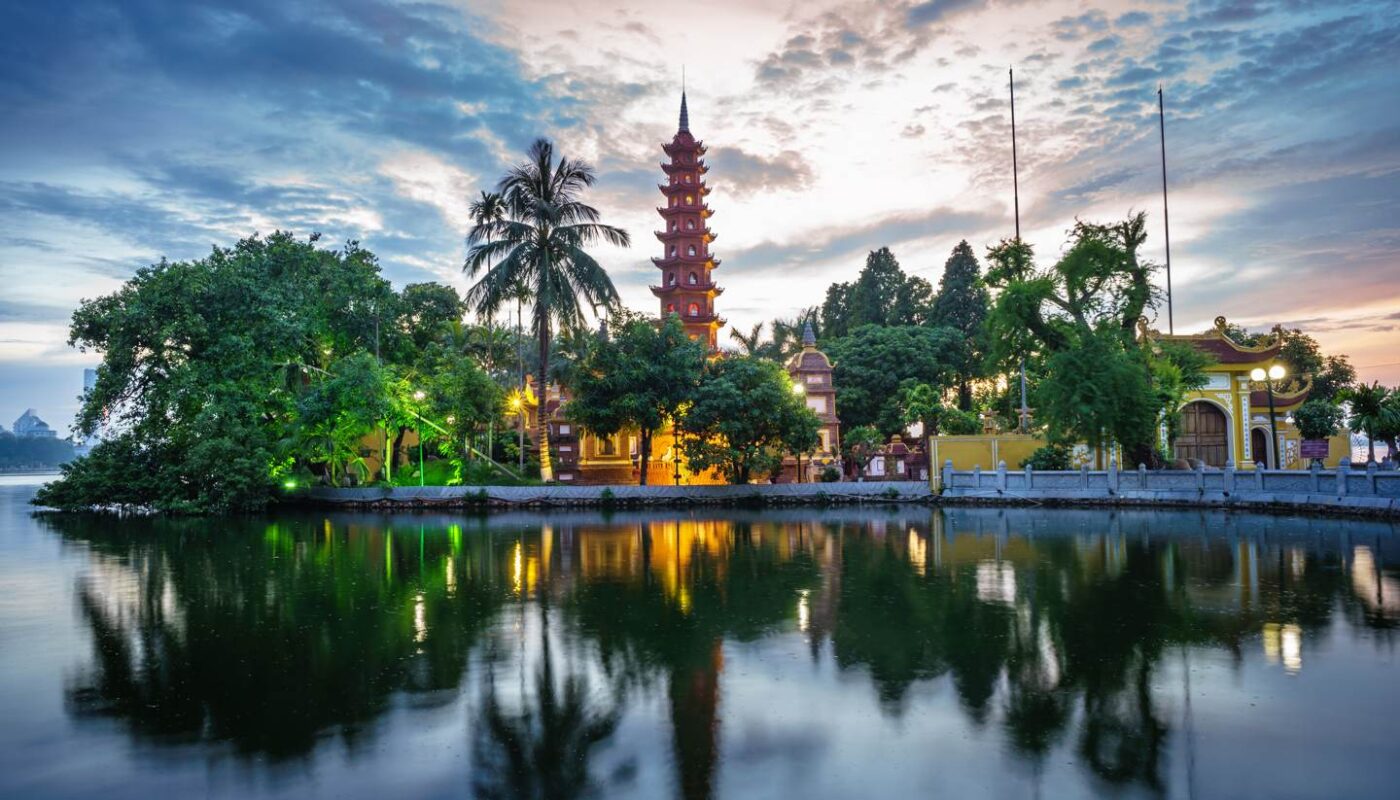
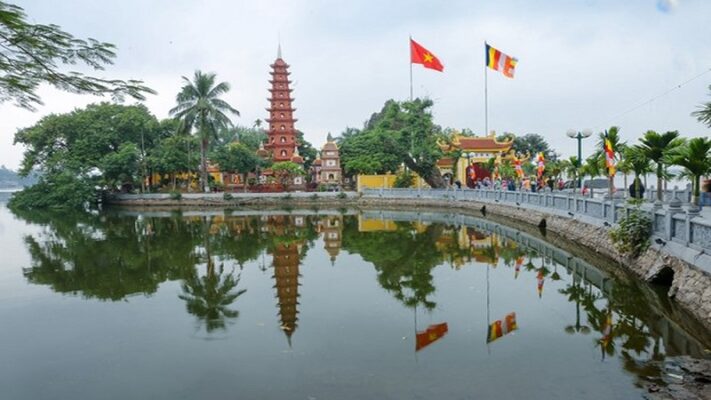
Tran Quoc Pagoda is located on an island on the East of West Lake (Tay Ho District), the 1500 year-old temple, which is considered the oldest in Thang Long – Hanoi. The architecture of the pagoda has a harmonious combination of ancient, dignified elegance with the tranquil landscapes of a vast lake. It was the Buddhist center of the Thang Long citadel in the Ly and Tran dynasties. With its historical and architectural values, Tran Quoc Pagoda is famous for its sacred Buddha’s door, which attracts many Buddhists and visitors to Vietnam.
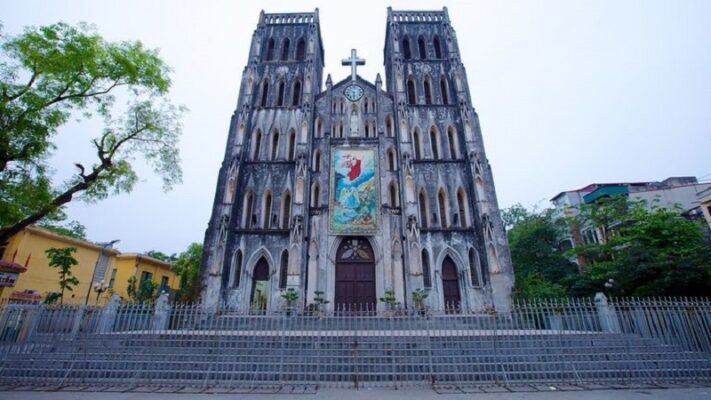
Hanoi Cathedral (official name: St. Joseph Cathedral) is the cathedral of the Archdiocese of Hanoi, where the archbishop’s throne. This is also an ancient church in this city built in 1886, often take place the religious activities of the laity of the archdiocese of Hanoi.
Hoan Kiem Lake is also known as Ho Guom. It is a natural fresh water lake in the center of Hanoi with area of about 12 hectares. Previously, the lake also had the name Luc Thuy Lake (because the water is green all year round), Thuy Quan Lake (used to navigate the sea). The name Hoan Kiem appeared in the early 15th century associated with the legend of King Le Loi to pay the sword for the gods.
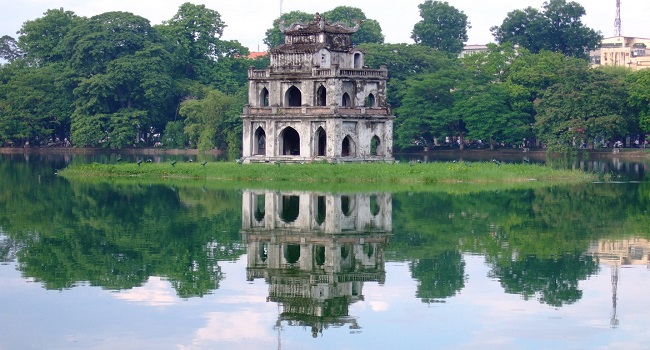
According to legend, once a King Le Loi rode on a boat, suddenly a gold turtle floated on the water demanding the king pay the sword that Long Wang lent to expel the Ming invaders. The king returned the sword to the god of turtles and diving into the water disappears. From that lake was named Hoan Kiem Lake. The lake is also named for a central district of Hanoi (Hoan Kiem District) and is the only lake in the district to this day.
The Vietnam Women Museum is located on Ly Thuong Kiet Street, near Hoan Kiem Lake and Hanoi Old Quarter. This museum is dedicated to Vietnamese women. The museum has been open to the general public since 1995. And it has been revising its regular exhibition system from 2006 to 2010 to honor Vietnamese women.
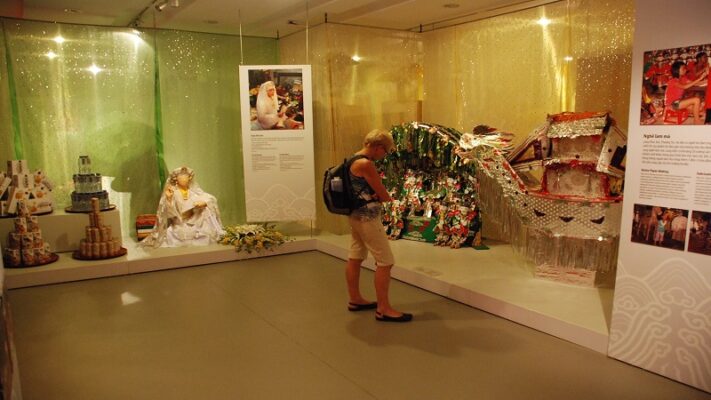
In addition to the regular display system, the Museum also organizes a number of thematic exhibitions with a new approach to social anthropology, reflecting the development and change of contemporary society by means of targeted projects to different groups of people, especially disadvantaged women and children.
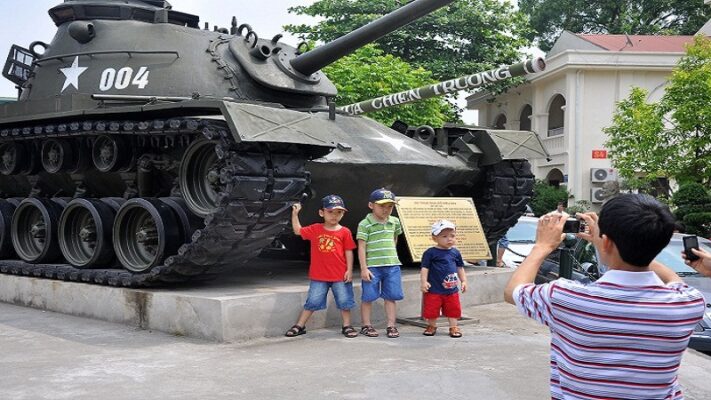
This museum belongs to the National Political Bureau and is the flagship museum of the military museum system. The Museum is currently displaying and preserving nearly 16,000 objects, including many precious objects, especially four national treasures (MiG21 aircraft number 5121 and T54B tank number 843, map of determination. Operation Ho Chi Minh, MiG21 Aircraft No. 4324). In the campus there is a monument of Hanoi Flagpole. This is a unique ancient architectural relics, was ranked the national historical architecture in 1990.
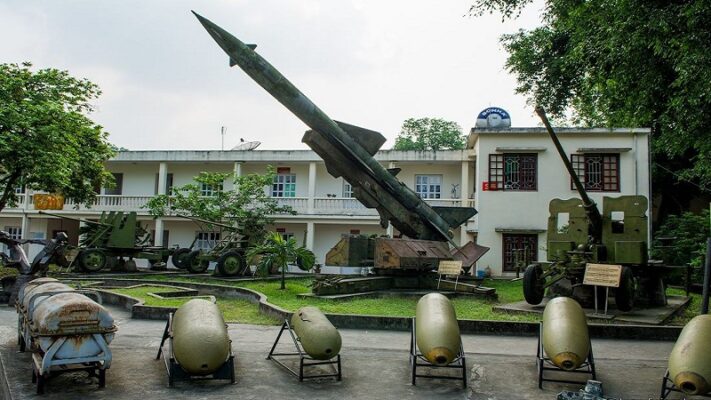
This museum displays weapons, ammunition and B52 aircraft crashed down. It also preserves both the image and artifacts of the Hanoi army and people during the Dien Bien Phu Air Battle. 1972 with the United States Air Force. The museum was inaugurated on December 22, 1997 and is located at 157 Doi Can Street, Ba Dinh District, Hanoi.
The Museum of Vietnam Ethnology Performing Arts preserves and displays many cultural objects of 54 ethnic groups in Vietnam. That includes 15,000 artifacts, 42,000 color photos, 2190 positive films, 273 audio interviews, 373 videotapes and 25 CD-Roms (as of 2000). These objects are classified according to various criteria such as ethnicity, utility, clothing, jewelry, farm tools, fishing gear, household appliances, musical instruments, religious beliefs, weddings Please, vegetarian and many other spiritual and social activities.
The bronze drum demonstration site regularly presents all 54 ethnic groups in Vietnam. There are many common objects in the daily life of people. All information in the exhibit, articles and annotations is available in three languages: Vietnamese, English and French. The museum also publishes a number of leaflets, which are available in Vietnamese, English, French, Chinese, German and Japanese.
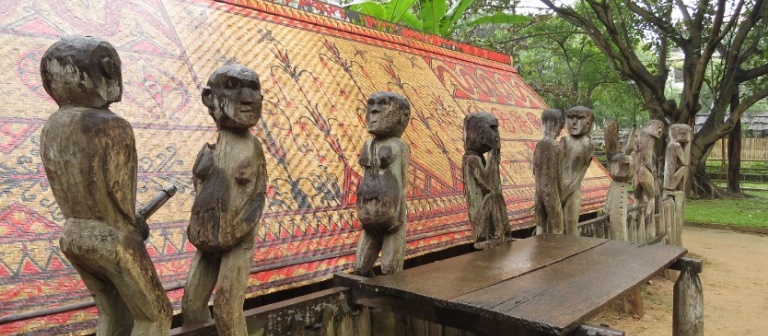
In the outdoor display area, there are 10 folk architecture works such as Bana communal house, Ede’s long stilt house, Tay house on stilts, the Vietnamese tile house, clay wall of the Ha Nhi, Giarai collective tomb and the cemetery of the Cotu people. there is a Ngo boat of the Khmer people and rice mortar of the Dao people. In front of the Vietnamese house, on Saturdays and Sundays there are water puppet performances by the local puppets from different villages.
Hanoi Train Street is one of the most attractive places to discover in the Capital City of Vietnam. Which attracts many hundred of domestic and foreign tourists every day.
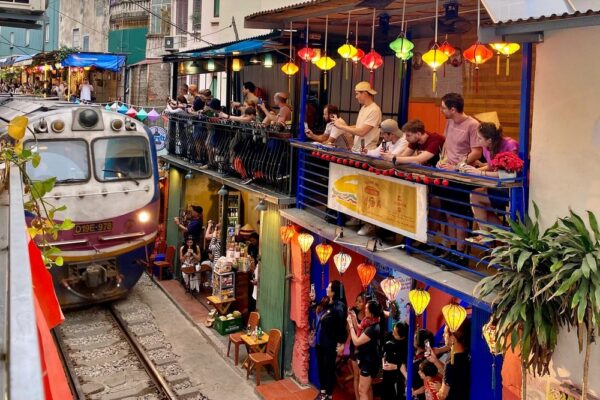
Many tourists come to Hanoi Train Street to enjoy coffee at the sidewalk. And take a great number of stunning pictures. But the safety of this place has created a huge concern for the local authorities. Therefore, all the check-in spots and cafes along the Train Street have been closed with caution signs on the street.
One Pillar Pagoda was originally named Lien Hoa Dai. Which means Lotus Flower, with a unique architecture: a shrine placed on a single pillar. Lien Hoa Dai is the most famous work in the architectural complex of Dien Huu Pagoda. Which means “Long-lasting blessings”. The original Dien Huu Pagoda was built during the winter of King Ly Thai Tong in 1049. And it was completed in 1105 during the reign of King Ly Nhan Tong.
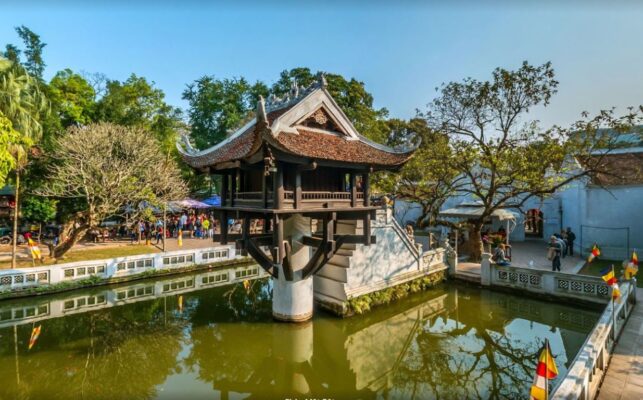
The current Lien Hoa Dai building located in Hanoi is a version. That has been modified many times over the periods. Pagoda was destroyed by the French when they withdrew from Hanoi on September 11, 1954. And then it was rebuilt in 1955 by the architect. Nguyen Ba Lang follows the architecture left from the Nguyen Dynasty. This is a temple with unique architecture in Vietnam.
Ho Guom Walking Street was put into operation on September 1, 2016 for the purpose of promoting Vietnamese culture. The neighborhood’s official operating time is every weekend from 19:00 on Friday to 24 hours on Sunday.
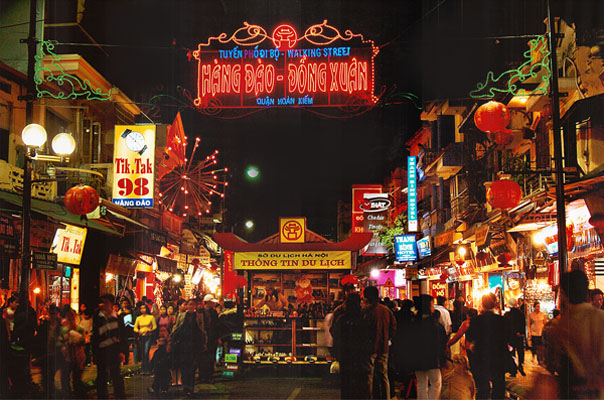
Walking street includes routes located near Hoan Kiem Lake area such as: Dinh Tien Hoang Street, Hang Khay Street, Le Thai To Street, Le Lai Street, Le Thach Street, Tran Nguyen Han Street, Dinh Le Street, Nguyen Xi Street, Trang Tien Street, Lo Su Street, Hang Dau Street, Hoan Kiem Lake Street, Luong Van Can Street, Hang Bai Street, Bao Khanh Street.
In the colonial years from 1858 to 1954, the French colonialists built a lot of buildings in various styles and on a large scale in Vietnam, especially in Hanoi.
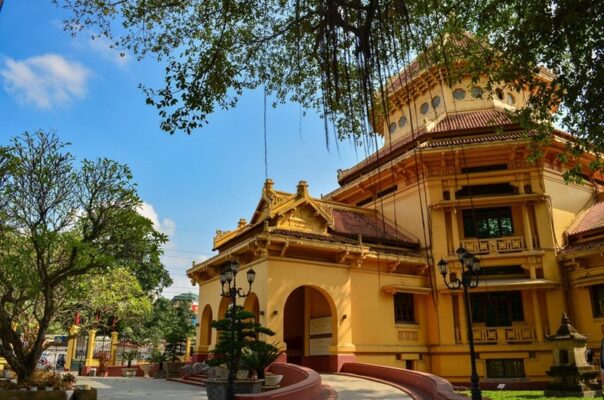
Formed and developed primarily in the period from the late 19th century until 1954. French’s colonial architecture played an important role in creating a large. And it has highly valuable heritage asset in the capital of Vietnam. French Quarter Hanoi is a representation of that.
Bach Ma is one of the oldest temples in Hanoi. It was built from the 9th century to worship the God Long Do (the original god of ancient Hanoi).
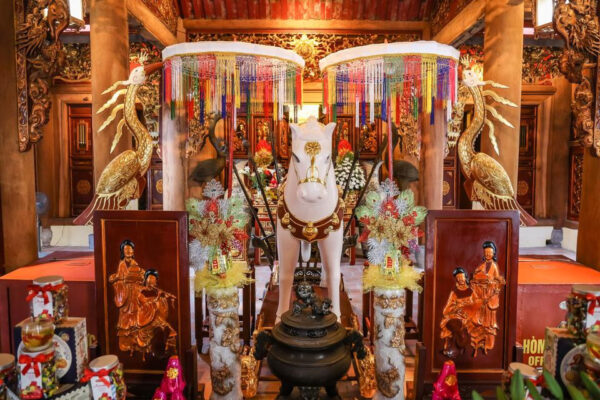
Bach Ma Temple is one of the four Gods of the ancient Thang Long citadel, including: Quan Thanh Temple (guarding the north of the citadel); Kim Lien Temple (guarding the south of the citadel); Voi Phuc Temple (guarding the west of the citadel); Bach Ma Temple (fortress east of the citadel), located at 76 Hang Buom Street, Hang Buom Ward, Hoan Kiem District, Hanoi.
Ly Quoc Su Temple is an ancient temple built in 1131 during the Ly Dynasty. It is also called Ly Quoc Su Tu. Currently located at 50 Ly Quoc Su Street, Hang Trong Ward, Hoan Kiem District, Hanoi City.
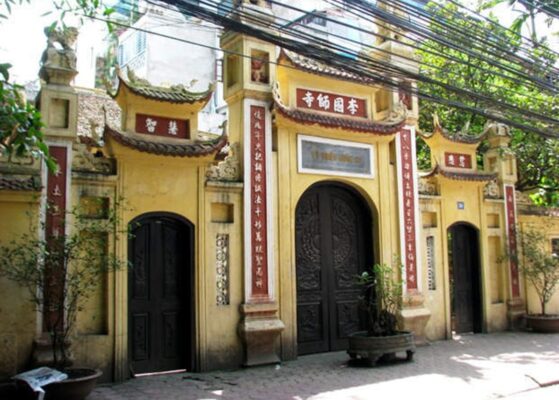
This place worships Zen master Nguyen Minh Khong who cured King Ly Than Tong’s illness. He was ordained as the national monk. And was ordained by the court in Tien Thi village (now Diem Xa) Gia Vien district, Ninh Binh province. When he died, the villagers built a temple called “Ly Quoc Su Tu”. In 1932, Zen Master Nguyen Van Dinh, the abbot, arranged more Buddha statues. So, the temple was called Ly Quoc Su pagoda.


