Introduction about Kanchanaburi Thailand:
Kanchanaburi Thailand Travel Guide: Located in western Thailand about 130 km (80 miles) from Bangkok, Kanchanaburi is the country’s third-largest province. It is globally renowned for its somber World War II history and its lush, mountainous landscapes.
As of 2026, the population figures of Kanchanaburi is approximately 896,351 (based on 2024 data), ranking it as the 26th most populous province in Thailand. The province has an average population density of about 46 people per square kilometer. While the provincial capital and surrounding districts like Tha Maka (132,000) and Tha Muang (109,000) are more densely populated, much of the province’s vast 19,482 km² area consists of mountainous terrain and national parks with lower settlement density.
Brief History of Kanchanaburi Thailand:
Kanchanaburi has a layered history ranging from prehistoric settlements to its pivotal strategic role in regional wars and its modern global recognition as a site of World War II significance.
Prehistoric and Ancient Eras:
– Early Settlements: Archaeological findings in caves and along river basins indicate that the area was inhabited as early as the Neolithic period, with stone tools and child burial sites dating back roughly 2,700 to 4,000 years.
– Khmer Influence (12th Century): During the reign of King Jayavarman VII, the region served as a western outpost for the Khmer Empire. This legacy is preserved at Muang Sing Historical Park, where 12th-century laterite ruins stand as the westernmost known example of Khmer architecture.
The Defensive Outpost (14th–19th Century):
– Ayutthaya Period: Kanchanaburi was established as a crucial frontier town to defend the kingdom from Burmese invasions coming through the Three Pagodas Pass. It was first mentioned in official chronicles during the Burmese invasion of 1548.
– City Relocation: The original town was located at Phanom Thuan (Lat Ya). In 1831, King Rama III ordered the city moved roughly 16 km southeast to its current location at the cofluence of the Khwae Yai and Khwae Noi rivers to better manage defense and trade.
World War II and the “Death Railway” (1942–1945):
– Japanese Occupation: During WWII, the Imperial Japanese Army occupied Thailand and used Kanchanaburi as the base for constructing a 415-km railway to Burma.
– Construction Toll: To build the railway through rugged jungle, the Japanese forced approximately 60,000 Allied prisoners of war (POWs) and over 200,000 Asian laborers into grueling labor.
– Human Cost: An estimated 100,000 people died from malnutrition, disease, and brutal treatment. The most famous section, the Bridge over the River Kwai, was bombed by Allied forces in 1945 and later reconstructed.
Modern Kanchanaburi:
Today, the province is a peaceful major tourism hub. It balances its role as a memorial site—home to the Kanchanaburi War Cemetery and several museums—with its status as a destination for ecotourism and natural exploration.
What to See, Places to Visit, Best Things to Do in Kanchanaburi:
Kanchanaburi offers a powerful blend of somber history and stunning natural beauty. Top activities include visiting the Bridge over the River Kwai and exploring the picturesque Erawan National Park.
Historical Sites & Memorials:
– River Kwai Bridge: Walking across this iconic railway bridge. That still hosts daily train crossings and learn about its poignant WWII history.

River Kwai Bridge (Photo Credit: mercuryholidays)
The River Kwai Bridge is a historic landmark in Kanchanaburi, Thailand, famous for its role in World War II as part of the “Death Railway”. Originally built by Allied prisoners of war (POWs) and Asian forced laborers under Japanese supervision, it remains an active rail bridge and a major tourist site
– Kanchanaburi War Cemetery (DonRak): A beautifully maintained, peaceful final resting place for nearly 7,000 Allied POWs who died during the railway’s construction.

Kanchanaburi War Cemetery (Photo Credit: kanchanaburicarrental)
The Kanchanaburi War Cemetery , also known locally as the Don-Rak War Cemetery, is a solemn and meticulously maintained burial ground for the Allied prisoners of war who died during the construction of the Burma Railway (the “Death Railway”) in World War II. It is located in the town of Kanchanaburi, Thailand, and is open daily with free admission.
– Hellfire Pass Interpretive Centre: Visit the site of a dramatic railway cutting hewn by hand through rock. The museum and walking trail provide a moving audio guide experience detailing the harsh conditions endured by the laborers.

Hellfire Pass Interpretive Centre (Photo Credit: bkktours)
The Hellfire Pass Interpretive Centre is a museum and memorial in Kanchanaburi, Thailand, dedicated to the Allied prisoners of war (POWs) and Asian laborers who died building the Burma-Thailand railway during World War II. It offers a moving and educational experience with a museum, a memorial walking trail into the actual cutting, and a free audio guide featuring survivor accounts.
– Death Railway Museum and Research Centre: Located adjacent to the war cemetery, this modern museum offers comprehensive, informative exhibits on the railway’s history.

Death Railway Museum and Research Centre (Photo Credit: thaiunikatravel)
The Death Railway Museum and Research Centre, also known as the Thailand-Burma Railway Centre, is a privately funded, interactive museum in Kanchanaburi, Thailand, dedicated to the history and human cost of the “Death Railway” built during World War II.
Nature and Outdoor Activities:
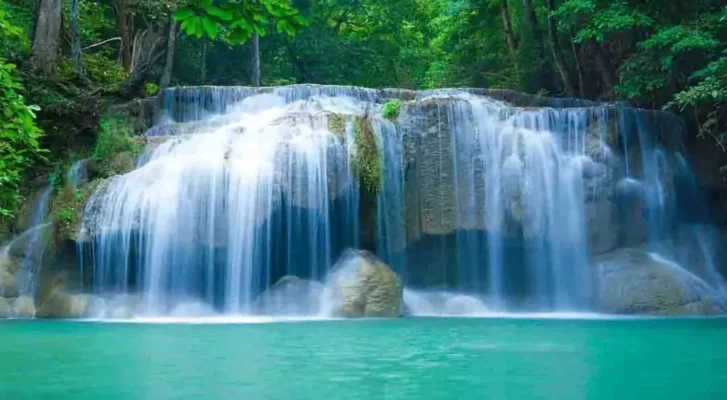
– Erawan National Park: Explore one of Thailand’s most famous natural attractions, featuring a magnificent seven-tiered waterfall with emerald-green pools perfect for swimming. Allocate a full day to hike all the way to the top tiers.

Erawan National Park (Photo Credit: cntraveler)
Erawan National Park is a protected area in Western Thailand’s Kanchanaburi Province, renowned for its seven-tiered Erawan Waterfall. The park offers hiking, swimming in emerald pools, and exploring caves within a lush forest environment.
– Sai Yok National Park: This extensive park offers more waterfalls (like Sai Yok Noi and Sai Yok Yai) and opportunities for exploring caves and a rich variety of wildlife.

Sai Yok National Park (Photo Credit: mychiangmaitour)
The Sai Yok National Park is a forested reserve in Thailand known for its scenic waterfalls, extensive caves, and historical sites related to the Death Railway. It offers a peaceful escape into nature with opportunities for hiking, swimming, and exploring the River Kwai Noi.
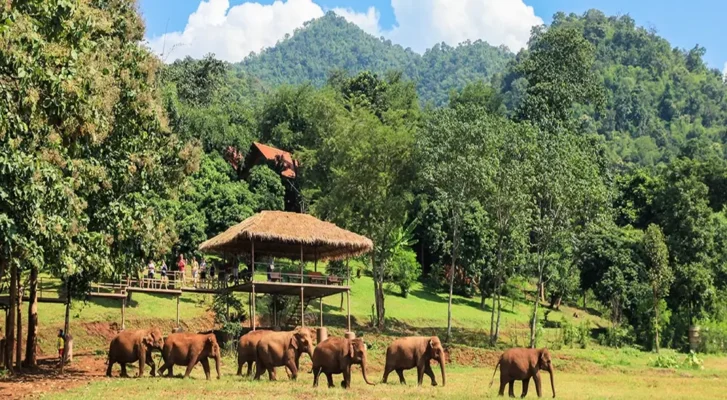
– ElephantsWorld: Visit a non-profit elephant sanctuary where you can help feed and bathe rescued elephants in a responsible, hands-off environment.

Elephants World in Kanchanaburi (Photo Credit: amazingasiatours)
The Elephants World is an ethical elephant sanctuary in Kanchanaburi, Thailand, dedicated to rescuing and caring for sick, old, abused, and disabled elephants. Visitors can participate in daily care activities such as feeding and bathing the elephants in the river.
– Mon Bridge (Uttamanusorn Bridge): Visit the longest handmade wooden bridge in Thailand, located in Sangkhlaburi, which offers cultural insights into the local Mon community and stunning lake views.

Mon Bridge or Saphan Mon (Photo Credit: thebear.travel)
The Mon Bridge , or Uttamanusorn Bridge, is the longest wooden footbridge in Thailand, located in the Sangkhla Buri District of Kanchanaburi province. It is a significant cultural landmark that connects the Thai and Mon communities across the Songkalia River.
Cultural and Local Experiences:
– Wat Tham Suea (Tiger Cave Temple): Climb the steps (or take the tram) to this hilltop temple for panoramic views of the surrounding rice fields and countryside, and to admire the giant golden Buddha statue.
– JJ Night Market Kanchanaburi: Enjoy authentic and affordable Thai street food, shop for local goods, and soak in the local atmosphere near the railway station in the evening.
– Take a scenic train ride: Ride the historic Death Railway train from Kanchanaburi to Nam Tok, passing dramatic cliffside sections and lush landscapes, including the wooden viaduct near Krasae Cave.
Kanchanaburi Thailand Weather/Climate and Best Time to Visit:
Kanchanaburi has a tropical climate with three distinct seasons: cool, hot, and rainy. The best time to visit is during the cool season, from November to February, when the weather is most pleasant for outdoor activities.
Kanchanaburi Seasonal Climate:
| Season | Months | Temperature (Avg. High) | Conditions | Pros & Cons |
| Cool (Dry) Season | Nov – Feb | 32–36°C (90–97°F) | Pleasant, dry, low rain, sunny | Best time to visit for all activities; peak tourist season, can be busy. |
| Hot Season | Mar – May | 36–39°C (97–102°F) | Very hot, high humidity, minimal rainfall in early months | Sightseeing can be draining; better for riverside relaxation and floating resorts. |
| Rainy (Monsoon) Season | Jun – Oct | 31–34°C (88–93°F) | Frequent rain (usually short bursts), high humidity | Landscapes are lush and green, waterfalls are at their most powerful; trails can be slippery. |
Best Time to Visit Kanchanaburi Thailand:
The ideal time for most travelers is the cool season (November to February). The weather during this period is comfortable for extensive exploration of historical sites, hiking in national parks like Erawan, and enjoying outdoor activities without the oppressive heat or daily heavy rain.
If you prefer to avoid crowds and see the waterfalls at their most spectacular, the rainy season (especially late in the season in September/October) can be a good option, provided you are prepared for rain and humidity. April, at the height of the hot season, is generally considered the most uncomfortable month for outdoor sightseeing.
Accommodation and Best Places to Stay in Kanchanaburi Thailand:
Accommodation options in Kanchanaburi range from budget guesthouses in the main town to unique, luxurious floating resorts on the river. The best place to stay depends on whether you prefer proximity to attractions and nightlife or a secluded, natural environment.
Near the River Kwai Bridge & Main Town:
Staying near the tourist hub on Mae Nam Khwae Road provides easy access to historical sites, restaurants, and bars. This area is ideal for first-time visitors who want convenience and a lively atmosphere.
Unique Floating & Riverside Retreats:
For a memorable experience, consider a stay in a floating “raft house” or a resort further from the town center. These offer tranquility and beautiful natural surroundings, though some are more remote.
Further Afield (Near Nature Parks):
If your focus is on natural attractions like Erawan Falls, staying further north in the Sai Yok district can save travel time.
Transportation and Getting Around in Kanchanaburi Thailand:
Getting around Kanchanaburi is straightforward, with options ranging from iconic train journeys to local forms of transport like songthaews and motorbike taxis.
Getting To Kanchanaburi:
The main entry point to the province is Kanchanaburi Town.
– By Train (Recommended for Scenery): Trains depart from Bangkok’s Thonburi Station (Bangkok Noi) daily. This offers a scenic journey that crosses the famous Bridge over the River Kwai. This is an experience in itself. The trip takes roughly 2.5 to 3 hours.
– Bus/Minivan (Most Direct): Air-conditioned buses and minivans run frequently from Bangkok’s Southern Bus Terminal (Sai Tai Mai) to the Kanchanaburi Bus Terminal. The journey takes about 2 hours.
– By Private Taxi/Transfer: The quickest, though most expensive, option is hiring a private car or taxi. This takes about 1.5 to 2 hours directly from Bangkok or the airports.
Getting Around Kanchanaburi:
Once in the province, local transportation is necessary to reach the scattered attractions (e.g., Erawan Falls is 60 km from the town center).
- Local Buses / Songthaews:
– Songthaews: These are covered pickup trucks acting as shared taxis or buses along fixed routes. They are the most common and cheapest way to travel between the main bus station and local attractions. Such as like Erawan National Park (via the #8170 bus route).
– Provincial Buses: These larger buses operate between different districts and towns within the province.
- Taxis and Motorbike Taxis:
– Motorbike Taxis: Best for short distances within Kanchanaburi town. Negotiate the fare before getting on for a safe and comfortable trip.
– Taxis / Tuk-Tuks: Taxis are available in the main town area. Tuk-tuks are less common than in Bangkok. But they are only available for short trips. You can hire taxis for half-day or full-day trips to visit multiple historical sites.
- Rental (Car, Motorbike, or Bicycle)
– Motorbike Rental: A popular and flexible option for experienced riders, allowing easy access to national parks and remote areas. Rentals are widely available near Mae Nam Khwae Road in the main tourist area.
– Car Rental: Recommended for those planning to explore widely across the province’s vast area, offering air conditioning and comfort.
– Bicycle Rental: Great for exploring the relatively flat Kanchanaburi town area and riverside pathways.
- The “Death Railway” Tourist Train
– A special tourist train runs a scenic route beyond the Bridge over the River Kwai. It often continues all the way to the end of the line at Nam Tok station. And passing the dramatic Wampo Viaduct section carved into the cliffs. This is a highly recommended sightseeing journey.