Introduction about Phnom Penh:
Phnom Penh is the capital and most populous city of Cambodia, serving as the nation’s political, economic, and cultural heart. Known as the “Pearl of Asia” during the French colonial era, it is situated at the confluence of the Mekong, Tonle Sap, and Bassac rivers.
Brief History of Phnom Penh:
Phnom Penh ’s history is a story of dramatic shifts, from its mythical founding and status as a 15th-century royal seat to its near-destruction in the 1970s and subsequent modern rebirth.
Origins and Legend (14th–15th Century):
– Lady Penh’s Discovery: According to legend, the city was founded in 1372 after a wealthy widow named Lady Penh (Daun Penh) found a floating koki tree trunk in the Mekong River. Inside, she discovered four bronze Buddha statues and one stone Vishnu statue.
– The First Hill: To house these sacred objects, she raised an artificial hill (phnom) and built a small shrine on top, now known as Wat Phnom. The city’s name literally translates to “Penh’s Hill”.
– First Capital Era: In 1434, King Ponhea Yat moved the capital from Angkor to Phnom Penh after the fall of Angkor to Siamese forces. It served as the capital until 1497 before being abandoned for over 300 years due to internal royal conflicts.
The French Colonial Era (1863–1953):
– Return of the Capital: In 1865, King Norodom I re-established Phnom Penh as the permanent seat of government, and the Royal Palace was built in 1866.
– “Pearl of Asia”: Under French administration (starting 1863), the city was transformed with wide boulevards, canals, and iconic Art Deco and colonial architecture, such as the Central Market and the Post Office. By the 1920s, it was celebrated as one of the most beautiful cities in Southeast Asia.
War and the Khmer Rouge (1970–1979):
– Evacuation: On April 17, 1975, the Khmer Rouge captured Phnom Penh. Within days, they forcibly evacuated the entire population of roughly 2–3 million people into the countryside for forced labor.
– The “Year Zero”: The city became a ghost town for nearly four years. Schools and religious buildings were converted into prisons, most notably S-21 (Tuol Sleng), where thousands were tortured before being sent to the Killing Fields (Choeung Ek).
– Liberation: Vietnamese forces captured the city on January 7, 1979, ending the Khmer Rouge regime.
Modern Restoration (1980s–Present):
– Reconstruction: After 1979, residents slowly returned to a city with no electricity or running water. Throughout the 1990s and 2000s, international aid helped rebuild essential infrastructure.
– Growth in 2025: Today, Phnom Penh is a rapidly developing metropolis with a population of over 2.4 million. Significant modern milestones include the opening of the Techo International Airport in September 2025.
What to See, Places to Visit and Things to Do:
Phnom Penh offers a rich blend of history, culture, and modern life. Top sights and activities include exploring significant historical landmarks, visiting ornate religious sites, and immersing yourself in the bustling local markets.
Must-See Historical Sites:
A visit to Phnom Penh is not complete without acknowledging its poignant history under the Khmer Rouge regime.
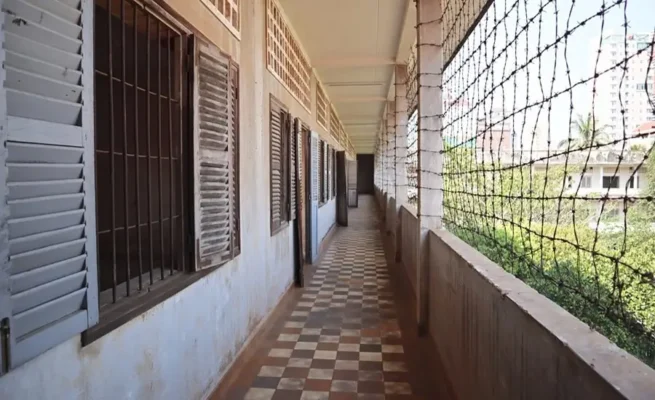
– Tuol Sleng Genocide Museum: This former high school was a notorious prison and torture center during the Khmer Rouge era (1975-1979). The museum displays haunting photos and preserved cells, offering a sobering but essential look into Cambodia’s tragic past. An audio guide is highly recommended to understand the context.
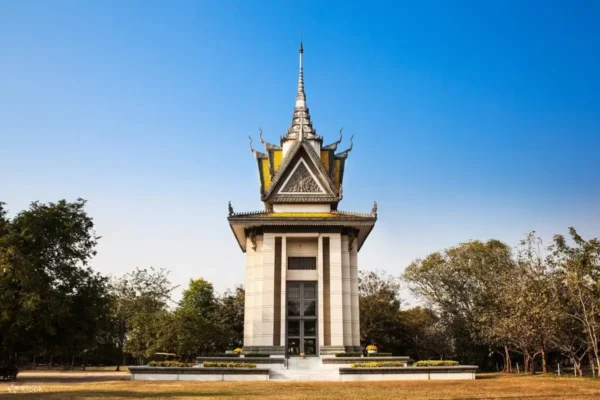
– Choeung Ek Genocidal Center: Located about 14 km outside the city center, this was a mass execution and burial ground for victims from S-21 prison. A memorial stupa filled with skulls serves as a powerful reminder of the atrocities committed.
– Independence Monument: This lotus-shaped monument, built in 1958, signifies Cambodia’s independence from France. It is beautifully illuminated at night and serves as a popular gathering spot for locals.
Cultural Landmarks:
Experience Cambodia’s rich cultural heritage through its stunning architecture and religious sites.
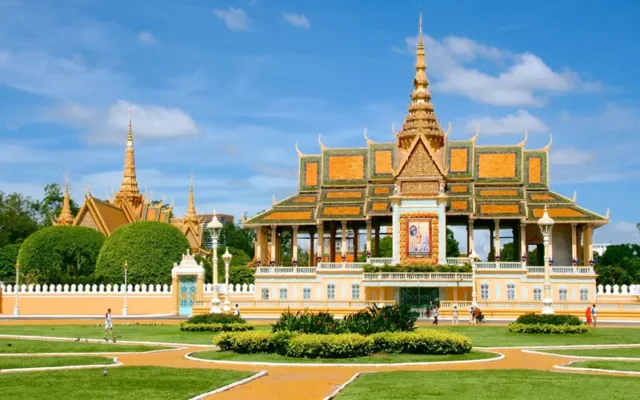
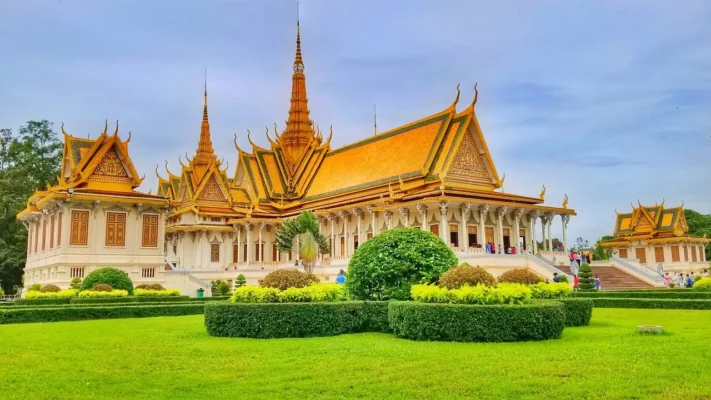
– Royal Palace & Silver Pagoda: The official residence of the King, the palace complex features stunning Khmer architecture and gilded roofs. The adjacent Silver Pagoda
– (Wat Preah Keo) houses national treasures, including an Emerald Buddha and a life-sized gold Buddha statue encrusted with thousands of diamonds.
– National Museum of Cambodia: Located just north of the Royal Palace, this museum houses the world’s largest collection of Khmer art and sculpture, with artifacts dating from the 4th to the 15th centuries.
– Wat Phnom: The city’s namesake is a peaceful, historic Buddhist temple on a small hill, offering a break from the city bustle and views of the surrounding area.
Markets & Shopping:
Explore the vibrant energy of Phnom Penh’s markets for everything from local food to souvenirs.
– Central Market (Phsar Thmey): Housed in a distinctive Art Deco dome building, this busy market offers a wide variety of goods, from jewelry and clothing to fresh produce.
– Russian Market (Toul Tom Poung Market): A popular spot for tourists and expats, known for its extensive selection of antiques, silks, fabrics, and local handicrafts.
– Sisowath Quay: The lively riverfront promenade along the Tonle Sap and Mekong rivers is lined with cafes, bars, and restaurants, perfect for an evening stroll or a sunset river cruise.
Activities & Experiences:
– Sunset River Cruise: Take a boat tour along the Mekong and Tonle Sap rivers to enjoy scenic views of the city skyline and local life along the riverbanks.
– Cycling the Mekong Islands (Koh Dach): Take a ferry to tranquil “Silk Island” to see traditional silk weaving, pottery, and enjoy rural Cambodian life, away from the city’s hustle and bustle.
– Enjoy Local Cuisine: Embark on a guided street food tour by tuk-tuk to sample authentic Cambodian dishes and experience the lively nightlife in areas like Bassac Lane.
Phnom Penh Weather/Climate and Best Time to Visit:
Phnom Penh has a tropical monsoon climate with two main seasons: a dry season and a rainy season. Temperatures are consistently high and humid throughout the year, but the seasons offer different travel experiences.
Phnom Penh Weather & Climate:
– Average Temperature: The temperature in Phnom Penh is warm all year round, typically ranging from a low of 22°C (72°F) to a high of 35°C (95°F), with the hottest months being March to May.
– Humidity: Humidity levels are high, especially during the wetter months, which can make the heat feel more intense.
– Rainfall: The majority of the annual rainfall occurs during the wet season. Rain showers are often heavy but short-lived, typically occurring in the afternoon or evening, leaving plenty of dry time for sightseeing.
Best Time to Visit Phnom Penh Cambodia:
The best time to visit Phnom Penh largely depends on your preference for weather, crowds, and landscape.
Dry Season (November to April):
This is generally considered the peak tourist season due to the pleasant weather conditions.
– Weather: Characterized by clear skies, low humidity, and minimal rainfall. The months from December to February are the coolest and most comfortable, ideal for outdoor activities and sightseeing.
– Pros: Excellent for exploring outdoor sites like the Royal Palace and local markets; ideal for river cruises and beach trips on the southern coast; many major festivals like the Water Festival (November) occur during this time.
– Cons: Higher tourist crowds and peak-season pricing for accommodations and flights. The later months, March and April, can be extremely hot, with temperatures soaring above 35°C (95°F).
Rainy Season (May to October):
Also known as the “green season,” this period offers a different, more tranquil experience.
– Weather: Expect higher humidity and frequent, but usually brief, downpours. Temperatures are slightly cooler than the hot dry season, averaging around 25°C to 27°C (77°F to 80°F).
– Pros: The landscape is lush and vibrant green, perfect for nature photography and visiting the floating villages of Tonle Sap Lake. Fewer crowds mean a more relaxed atmosphere and better prices for hotels and tours.
– Cons: Heavier rains, especially in September and October, can cause some flooding and make travel to remote rural areas difficult. Outdoor activities may be briefly interrupted by showers.
Accommodation and Best Places to Stay in Phnom Penh:
The best places to stay in Phnom Penh are generally divided into popular neighborhoods that cater to different preferences, including the historic Daun Penh area, the lively Riverside district, and the expat hub of BKK1. Popular Neighborhoods & Accommodation Options include:
Riverside (Sisowath Quay):
The best area for first-time visitors who want proximity to major attractions, nightlife, and dining. It features a mix of budget guesthouses and luxury hotels overlooking the Tonle Sap and Mekong Rivers.
– Luxury: Palace Gate Hotel & Resort is situated right by the Royal Palace and offers lush gardens and a serene pool. The modern Hotel KVL is a stylish homegrown brand also located in a prime riverfront spot.
– Mid-Range/Budget: Options like the Ohana Phnom Penh Palace Hotel provide centrally located accommodation with rooftop pools and river views at a good value. Backpacker hostels like Onederz Hostel Phnom Penh are also popular here.
BKK1 (Boeung Keng Kang 1):
Known as the expat and NGO hub, BKK1 is quieter than the riverside but filled with stylish cafes, international restaurants, spas, and boutiques. It’s a great choice for a more relaxed, modern stay.
– Luxury: The historic Raffles Hotel Le Royal offers colonial charm and first-class service. The modern Hyatt Regency Phnom Penh is another 5-star option in this area.
– Mid-Range: The Plantation Urban Resort & Spa provides a tranquil oasis with a large pool in a central location.
Tuol Tompoung (Russian Market Area):
An increasingly bohemian area slightly outside the city center, known for its good value accommodation and vibrant local market scene.
– Mid-Range: This area has a range of well-priced guesthouses and apartments, ideal for travelers seeking more local experience.
Daun Penh (Central District):
This central area is home to many key landmarks, including Wat Phnom and the Central Market. It offers a wide range of hotel options across all price points.
– Budget: Many budget-friendly hostels and guesthouses can be found around here.
Transportation and Getting Around in Phnom Penh:
Getting around Phnom Penh is best done using a mix of traditional and modern transportation options, with ride-hailing apps and tuk-tuks being the most popular and convenient choices for tourists. The city is not very pedestrian-friendly, so motorized transport is recommended.
Getting Around Within Phnom Penh:
– Ride-Hailing Apps (Grab, PassApp, TADA): These are arguably the most convenient options for tourists. The apps function like Uber/Lyft, offering fixed prices, removing the need for bargaining, and avoiding language barriers with drivers. You can book tuk-tuks, rickshaws, or air-conditioned taxis through these apps.
+ Pros: Transparent pricing, easy communication, widely available.
+ Cons: Requires a local SIM card to set up some apps (like PassApp).
– Tuk-Tuks (Remork-moto): These classic Cambodian vehicles (a carriage pulled by a motorcycle) are ubiquitous and great for short trips. Fares are negotiable, so agree on a price before starting your journey to avoid issues. A short ride (1-2 km) usually costs around $1.50-$2 USD.
+ Pros: Authentic experience, readily available on the street.
+Cons: You may need to haggle, and there is a risk of bag snatching, so keep valuables secure.
– Taxis: Taxis offer air-conditioned comfort and are a safer, more private option, though they are more expensive than tuk-tuks. Many are unmetered, so price negotiation is necessary if hailing one on the street. Booking via a ride-hailing app is better option for set prices.
– Public Buses: Phnom Penh has a small but growing public bus system with over 21 routes that cover most major points and attractions, including the airport. The fare is a very cheap KHR 1,500 (around $0.37 USD) per ride.
+ Pros: Incredibly cheap.
+ Cons: Can be busy, not all are air-conditioner, and require an understanding of the routes using apps like “Stops Near Me”.
– Walking & Cycling: Walking is feasible for short strolls along the riverside, but the heat, traffic, and lack of good sidewalks make it challenging for long distances. You can rent bicycles and motorbikes for a daily fee, but navigating the chaotic traffic requires experience.
Transportation To/From the Airport:
The Techo International Airport (KTI) is about 10 km from the city center. Options for transfer include:
– Airport Express Bus (AEB): The cheapest option, running daily from 05:30 AM to 11:30 PM. The journey takes about an hour and costs KHR 1,500 (approx. $0.37 USD).
– Official Airport Taxis: Available right outside the terminal with fixed fares (usually $12-$15 USD depending on your destination zone).
– Ride-Hailing Apps: You can book a Grab or PassApp ride from the designated pick-up points, typically costing around $7-$10 USD for a tuk-tuk or slightly more for a car.
– Private Transfer: Hotels or travel agencies can arrange pre-booked private cars or minivans for around $18-$30 USD, offering a hassle-free arrival.
Intercity Travel:
For travel to other Cambodian cities like Siem Reap or Sihanoukville:
– Buses/Vans: Air-conditioned express buses and minivans are the most popular and affordable way to travel between major cities. Companies like Giant Ibis are popular choice. You can book tickets online via platforms like BookMeBus.
– Flights: Domestic flights from Phnom Penh to Siem Reap or Sihanoukville are the fastest option, taking about 45 minutes. Airlines include Cambodia Airways and Air Cambodia.
– Trains: Limited passenger train service links Phnom Penh to Sihanoukville (via Kampot) and the Thai border at Poipet, though services are infrequent.