Introduction about Battambang:
Battambang Cambodia is the country’s third-largest city and its unofficial creative capital. It is located in the northwest along the Sangkae River, it is celebrated for its blend of well-preserved French colonial architecture, a thriving arts scene, and a relaxed, “sleepy” atmosphere that contrasts with the bustle of Phnom Penh or Siem Reap.
Brief History of Battambang:
Battambang Cambodia ’s history is a unique tapestry of ancient Khmer roots, over a century of Thai rule, and a significant French colonial legacy that shaped its modern identity.
Ancient & Legendary Origins (11th Century):
– Establishment: Founded in the 11th century during the Khmer Empire, Battambang Cambodia served as a vital trade hub due to its location on the Sangkae River.
– The Legend: The name means “Lost Stick” (Batdambang). Legend tells of Ta Dambang, a cowherd who used a magical black staff to overthrow a king but later lost the staff when a prince defeated him with a flying horse.
Siamese (Thai) Rule (1795–1907):
– Annexation: In 1795, Siam (modern Thailand) annexed Battambang and Siem Reap, naming the region Phra Tabong.
– Autonomous Fiefdom: For over a century, it was ruled as an autonomous province by the Aphaiphubet family, a lineage of Thai-appointed governors.
– Thai Influence: This period left a lasting impact on local pagodas, dialects, and administrative systems.
French Colonial Era (1907–1953):
– Return to Cambodia: Under the Franco-Siamese Treaty of 1907, Siam ceded the province back to the French Protectorate of Cambodia.
– Modernization: The French transformed it into Cambodia’s second city, implementing a grid-style urban plan, building 800+ colonial shophouses, and establishing the national railway.
– World War II: Thailand briefly retook the province from 1941 to 1946 with Japanese assistance before returning it at the war’s end.
Post-Independence & Civil War (1953–1990s):
– Golden Age: After independence in 1953, Prince Norodom Sihanouk prioritized Battambang for industrial growth, building an airport and university.
– Khmer Rouge Era: In 1975, the city was forcibly evacuated. The surrounding hills, such as Phnom Sampeau, became sites of mass execution (the “Killing Caves”).
– The Final Stronghold: Even after the regime fell in 1979, the province remained a Khmer Rouge stronghold and a front-line battle zone until the final surrender in 1996.
Modern Renaissance (21st Century):
– Creative Capital: Since the late 1990s, the city has reinvented itself as a center for the arts, largely through the Phare Ponleu Selpak school.
– UNESCO Recognition: In 2023, it became the first Cambodian city to join the UNESCO Creative Cities Network for its culinary heritage.
What to See, Places to Visit and Things to Do:
Battambang Cambodia offers a rich blend of history, culture, and nature, with key attractions located both within the city and in the surrounding countryside. A popular way to explore is by hiring a tuk-tuk driver for a full-day tour that typically includes most of the major sites. Here is the recommendations for:
Top Attractions and Things to see in Battambang Cambodia:

Ride the Bamboo Train in Battambang (Source: allpointseast)
– Ride the Bamboo Train (Norry): Experience the unique, improvised rail vehicle made from a bamboo platform with a small motor that runs on a short section of disused track through picturesque rice fields.

Bat Cave in Battambang (Source: helloangkor)
– Witness the Bat Cave Spectacle: Head to Phnom Sampeau (Sampeau Mountain) at dusk to watch millions of bats pour out of a cave in a massive, swirling cloud, an incredible natural phenomenon.

Killing Caves in Battambang (Source: excursionmania)
– Visit the Killing Caves: At Phnom Sampeau, pay respects at the solemn memorial in the “Killing Caves” that houses the remains of victims from the Khmer Rouge era.
– Explore Ancient Temples: Battambang is home to several impressive ancient Khmer temples and pagodas that offer a glimpse into Cambodia’s rich history and architectural heritage. The two main ancient temple ruins are Wat Banan and Wat Ek Phnom , located at the south and north ends of the city, respectively.

Wat Banan in Battambang (Source: travelbeginsat40)
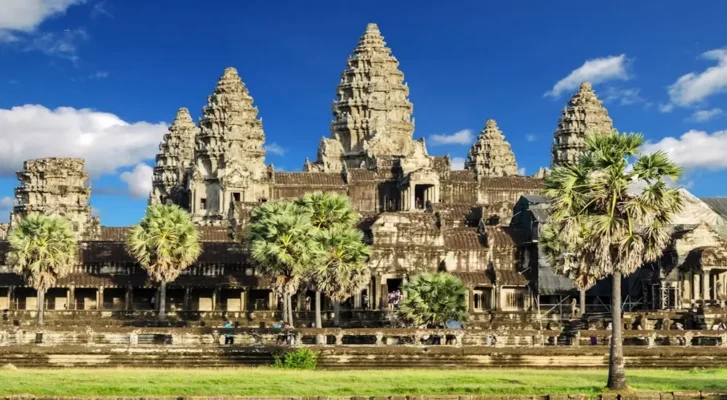
+ Wat Banan: Climb the 358 steps to the top of this 11th-century Angkorian-style temple for panoramic countryside views. The Wat Banan is widely considered the best-preserved Angkor-era temple in Battambang Province. Built between the 11th and 12th centuries, it is often referred to as a smaller-scale precursor or “prototype” to Angkor Wat due to its distinctive five-tower layout.

Wat Ek Phnom in Battambang (Source: cambotours)
+ Wat Ek Phnom: Visit these peaceful 11th-century temple ruins, featuring intricate carvings and a giant seated Buddha statue nearby. Thinking Searching Wat Ek Phnom is a fascinating historical and religious complex located about 9–13 km north of Battambang. It is a unique site where 11th-century Angkorian ruins stand alongside a vibrant modern pagoda and a massive, iconic Buddha statue.
Best Activities to Do in Battambang Cambodia:
Battambang offers a variety of unique cultural and historical activities that can be easily explored via tuk-tuk or bicycle tours . The top activities include riding the famous bamboo train, visiting ancient temples and somber historical sites, and experiencing the city’s vibrant arts and food scene:
– Experience the Arts Scene: Watch an energetic circus performance (acrobatics, dance, theater) at Phare Ponleu Selpak, a non-profit arts school that supports disadvantaged youth.
– Tour the Countryside: Take a bicycle tour with a socially responsible company like Soksabike or a tuk-tuk tour to discover local village life, traditional stilt houses, rice paddies, and handicraft production (e.g., rice paper, fish paste, sticky rice in bamboo).
– Walk the French Colonial Quarter: Stroll through the city center to admire the well-preserved French colonial architecture. That is including the former Governor’s Residence and the Art Deco Psar Nat Market (Central Market).
– Visit Romcheik 5 Art Space & Café: Explore contemporary Cambodian art in this acclaimed gallery that supports local artists.
– Take a Cooking Class: Learn to prepare classic Khmer dishes like fish amok by joining a local cooking class at places like the Smokin’ Pot or Coconut Lyly.
Battambang Weather/Climate and Best Time to Visit:
Battambang Cambodia has a tropical monsoon climate with two main seasons. The dry season from November to April and the wet season from May to October. The best time to visit is during the cooler part of the dry season, specifically from November to February, when the weather is most pleasant.
Battambang Climate Overview:
Temperature: The weather is hot year-round, with average high temperatures generally ranging from 31°C to 36°C (88°F to 97°F). April is typically the hottest month.
Humidity: The humidity is high throughout the year, but it is most oppressive during the wet season.
Rainfall: The region experiences significant rainfall during the wet season, with August and September being the wettest months. The dry season sees very little precipitation.
Best Time to Visit Battambang:
The ideal time to plan your trip to Battambang Cambodia depends on your preferences for weather and activities:
– Peak Season (November to February): This is the most popular time to visit due to the pleasant, cooler, and dry conditions.
+ Pros: Minimal rain, clear skies, and comfortable temperatures. That makes perfect for outdoor activities like visiting ancient temples, exploring the countryside, or riding the bamboo train.
+ Cons: This is peak tourist season, so you may encounter more crowds.
– Hot Season (March to May): The weather becomes very hot, with April often seeing the year’s highest temperatures.
+ Pros: Still dry, good for those who can handle the heat and want to attend the Khmer New Year festival in April.
+ Cons: Extreme heat can make midday outdoor sightseeing challenging.
– Wet Season (May to October): The southwest monsoon brings frequent, sometimes heavy, rain.
+ Pros: The landscape is lush and green, offering beautiful picturesque views of the “rice bowl” region. There are also fewer tourists, which can mean better prices.
+Cons: Rain can disrupt outdoor plans, and some rural roads might become muddy or flooded in July and August.
In summary, for the most comfortable weather and a seamless experience for all outdoor activities, aim for November through February. If you prefer fewer crowds and lush green scenery, consider a visit during the early or late wet season (May or October).
Accommodation and Best Places to Stay in Battambang:
Battambang Cambodia offers diverse accommodation options. From budget-friendly hostels in the city center to tranquil resorts and authentic homestays in the nearby villages. The city center is the most convenient area for easy access to restaurants, markets, and colonial buildings. While places outside the center offer a more relaxed, picturesque setting.
City Center (Convenience & Vibe):
Staying in the city center is ideal for travelers who want to be close to the riverside, night market, and the majority of the town’s restaurants and bars.
– Bambu Hotel: A charming riverside hotel featuring Khmer design, a garden, and a central location with a pool.
– Royal Hotel: A popular, budget-friendly option known for its excellent central location near the market and river, and friendly staff.
– Muni Residence & Spa: This family-run boutique hotel offers clean, spacious rooms and excellent service with a pool and is within walking distance of many attractions.
– Hostels: For budget travelers, options like Pomme Hostel Restaurant & Bar – Private Sleeping Cabins and Social Backpacker Hostel & Rooftop Bar offer a social atmosphere, bars, and good value for money.
Tranquil Escapes (Resorts & Villas):
For a more relaxed, quiet stay away from the hustle of the city, consider the resorts and villas located a short tuk-tuk ride away (typically in villages like Wat Kor).
– Maisons Wat Kor 4-star hotel: A collection of rooms in traditional Khmer-style houses set in a tranquil village with tropical gardens and a saltwater pool.
– Battambang Resort 3-star hotel: Located in Wat Kor Village. This serene resort offers spacious rooms with garden or lake views, a beautiful pool, and a peaceful atmosphere.
– Au Cabaret Vert 4-star hotel: An eco-friendly hotel offering bungalows with private patios and a natural-filtering swimming pool in a quiet setting.
– The Sanctuary Villa Battambang 4-star hotel: This hotel offers a beautiful setting with an outdoor pool and garden, providing a quiet place to relax slightly outside the main town.
Authentic Local Experience (Homestays):
For a genuine taste of Cambodian village life, homestays provide an immersive experience with local families.
– Savet Family Homestay & Tour: Offers bamboo bungalows with private bathrooms in a local village setting. Here you can experience the local lifestyle and enjoy homemade dinners.
– Family Batcave Homestay 1-star hotel: Located near the famous Bat Caves, this homestay provides a personal experience. And they can arrange tours of the local area.
Most hotels and guesthouses can arrange tuk-tuk services and tours for sightseeing. So making it easy to explore the city and surrounding countryside regardless of where you stay.
Transportation and Getting Around in Battambang:
Getting to Battambang from other major Cambodian cities is straightforward, primarily via bus, minivan, or private taxi. Once in the city, the most popular way to explore is by tuk-tuk or bicycle. This offers flexibility for both city exploration and countryside tours.
Getting To Battambang:
1. By Bus/Minivan (Most Common & Affordable):
Buses and minivans run frequently from Phnom Penh and Siem Reap, offering the most budget-friendly option.
– From Phnom Penh: The journey takes approximately 5 to 6 hours and costs around $8 to $17 USD depending on the operator and service. Companies like Virak Buntham, Saly VIP, and Giant Ibis offer multiple daily departures.
– From Siem Reap: The trip is shorter, typically 3 to 4 hours by bus, with tickets costing between $7 and $10 USD.
– Booking: Tickets can be purchased online through platforms like 12GoAsia or BookMeBus, or directly from bus company offices and guesthouses.
2. By Private Taxi/Car to Battambang:
Private transfers offer greater comfort, flexibility, and door-to-door service.
– From Phnom Penh: A private taxi takes about 4-5 hours and can cost around $60 USD for a car.
– From Siem Reap: The drive takes roughly 2.5 to 3 hours and costs around $65 USD for a 3-seater car. Which can be cost-effective for groups.
3. By Railway Train:
There is a train service, but it’s often run for experience rather than efficiency. A daily train runs from Phnom Penh to Battambang. But the journey takes around 6 hours 50 minutes, longer than a bus.
4. By Boat (Scenic Option):
A scenic boat trip runs between Siem Reap and Battambang via the Sangkae River and the Tonlé Sap lake. It takes anywhere from 6 to 12 hours depending on water levels. This service is primarily for tourists and may not run during the dry season (March-April). Prices are around $20-$25 USD.
Getting Around Battambang:
The city center is relatively compact and easily walkable, but transport is needed for the main attractions outside the city.
– Tuk-Tuk: The most popular and convenient way to get around the city and the surrounding province. A short ride within town usually costs around $1 USD. While a half-day or full-day tour to sites like the Bat Caves and Wat Banan costs between $10 and $25 USD, which you should negotiate beforehand. Many drivers act as knowledgeable guides.
– Bicycle: Renting a bicycle is an excellent and picturesque way. That helpd you to explore the flat countryside and nearby villages like Wat Kor. Rentals are inexpensive, typically costing $1 to $2 USD per day, or $5 USD for a mountain bike. Soksabike is a well-known company offering guided cycling tours.
– Motorbike: For more flexibility, you can rent a motorbike for around $8 USD per day. Traffic is lighter than in larger Cambodian cities, but caution is advised.
– Ride-Hailing Apps: The Pass app is available, but you may need a local Cambodian number to use it. Ride-hailing services like Grab are not available.